Glioblastoma topples an American hero, but researchers will continue the fight

Sen. John McCain pictured on July 27, 2017. McCain returned to Washington after surgery for glioblastoma to cast a ‘no’ vote to a Republican-backed bill to repeal Obamacare.
Cliff Owen/AP Photo

Duane Mitchell, University of Florida

Sen. John McCain withstood beatings and torture as a prisoner of war, but he was confronted with an enemy in July 2017 that he was ultimately unable to overcome. An aggressive and deadly brain cancer known as glioblastoma, or GBM, took McCain’s life on Aug. 25, 2018.

The man noted for his unstoppable resilience, pervasive optimism and uncompromising personal ethos was not able to conjoin forces with the marvels of modern medicine and defeat the insidious enemy of brain cancer.

Why is GBM so deadly? Why have so many individuals, with presumably all the physical and financial resources that can be amassed readily available to them, been unable to conquer this dreadful enemy? Sen. Edward M. Kennedy died from the disease exactly nine years earlier. In 2015, GBM also claimed the life of Joseph “Beau” Biden III, son of Joe Biden, the former vice president. It kills about 15,000 people in the U.S. each year. Most people diagnosed with the disease survive less than two years.

Has GBM been cured in any individuals, and if so, why not in most who are affected by this disease?

I am a physician and scientist who studies ways to stop GBM. Despite the sadness and great loss we feel at Senator McCain’s passing, we are making progress in the treatment of this disease.

An ongoing battle

By 1970, cancer had become the second-leading cause of death in the United States. It still is today, claiming about 600,000 lives a year.

In 1971, President Richard Nixon signed the National Cancer Act. While the legislation did not contain the phrase “War on Cancer,” those words quickly caught on. A concerted quest to find a cure for malignant diseases had begun.

The landmark legislation broadened the authority of the director of the National Cancer Institute (NCI) to implement research programs and cooperate with other agencies to direct educational efforts focused on reducing cancer mortality in the U. S. The act created a “bypass budget” for the NCI that is submitted directly from the NCI director to the president of the United States and to Congress, highlighting the priority put on reducing cancer mortality by the U.S. government.

The NCI investment in cancer research, along with billions of dollars from the pharmaceutical industry, have undoubtedly had a profound positive impact on the prevention, diagnosis and treatment of cancer. However, unlike the decade of success embodied by our nation’s quest to put a man on the moon, winning the war on cancer has proven to be a much more elusive goal – and much longer than 10 years.

While decades of research have led to many new, effective treatments, research also has revealed a marked complexity in many cancers, particularly those that have spread beyond the site where the tumor originated.

A first in the fight

GBM was the first cancer to undergo comprehensive genetic analysis as part of the multibillion-dollar NCI-led project called “The Cancer Genome Atlas.” This ambitious quest sought to completely analyze the gene expression patterns and DNA sequence of several human cancers and make the data publicly available for scientists to study. It has been a game changer in the assault against cancer.

Glioblastoma cells under a microscope. These cells can be deceiving, however, as genetic differences may be present that do not show up under a microscope.
Anna Durinikova/Shutterstock.com

Scientists have learned, for instance, that GBM, like many cancers, is not a single disease. Even though two patients may receive the same diagnosis of GBM and may have tumors that look almost identical under a microscope, at the cellular level these tumors can be quite different, with different mutations in the DNA code and different pathways driving tumor growth. This understanding means that a single therapeutic approach is very unlikely to work the same in all individuals with the same diagnosis of GBM.

Essentially, these patients really don’t have the same disease. This new understanding, while tremendously important in shaping our strategies for treating GBM going forward, also raises the realization that the enemy we face in GBM is even more insidious than thought.

To add to this complexity, we understand now that even within a given patient’s tumor, the individual cancer cells can even differ significantly from one another, having diverged over time through rapid growth and through the accumulation of different mutations within different tumor cells. This means that the same treatment hitting the tumor cells within a single patient will likely not kill all cancer cells with the same effectiveness. This allows resistant tumor cells within the population to grow back in the face of treatment that may have been initially effective.

Tackling this complexity at the cellular level to develop treatments that are effective against all tumor cells within a patient is a major challenge for tumors such as GBM. It likely accounts for much of the resistant nature of the disease.

Invasive tactics

An additional characteristic of GBM is the invasive nature of the disease. GBM tumor cells essentially crawl away from the main tumor mass and embed themselves deep within the normal brain, often hidden behind a protective barrier known at the blood-brain barrier. This invasive feature means that while neurosurgeons can often remove the main central tumor mass of a GBM, the invasive finger-like projections protrude into other areas of the brain. The distant islands of tumor cells that have migrated away cannot be effectively removed by surgery.

Radiation treatment is effective in controlling tumor growth, but there are limits to the doses of radiation that can be delivered to normal brain. Chemotherapy treatment with temozolomide currently can extend survival on average by several months. But the blood-brain barrier, or specialized cells that keep threats away from the brain, restricts many drug treatments from getting into the brain, and the mixed populations of tumor cells are already poised to grow out of the cancer cells that are resistant to the agents that do get through.

Cautious optimism

When one takes an inventory of what we’ve learned about GBM, it is easy to become discouraged and perhaps to conclude that we are facing an insurmountable foe. Such a conclusion might be warranted, were it not for the fact that despite the incredible complexity and challenges faced in successfully treating GBM, long-term survivors of this disease do exist.

Long-term survival, or five years or longer from time of diagnosis, with standard treatment regimens is reported at 9.8 percent from a systematic study of 573 patients with GBM. While 9.8 percent is an unacceptably low rate, it is demonstrable evidence that long-term survival is feasible.

We have learned that survivors tend to be younger than 50, have tumors that were able to undergo more extensive surgical removal at diagnosis, and have molecular features that predict a better response to the chemotherapy.

Recent advances in the treatment of GBM have also brought the advent of a new device technology that delivers alternating low-intensity electric fields called tumor-treating fields. Long-term survival data has not yet been reported for the addition of tumor-treating fields to standard treatment, but a median survival improvement of 4.9 months from 16.0 months to 20.9 months was reported in a recently completed phase III clinical trial involving 695 patients. It is possible that an improvement in long-term survival rates will also be observed in patients receiving this combined treatment.

Perhaps our greatest hope comes from emerging therapeutic strategies such as immunotherapy and personalized medicine approaches. Our immune systems are hard-wired to deal with complexity and variety, needing to respond rapidly and effectively to a myriad of unknown and changing infectious threats from the environment. The field is just beginning to understand how to harness this potent and adaptable killing power to hone in on cancer cells in a comprehensive way. We have observed encouraging long-term survival outcomes in patients with GBM during our early phase clinical trials of immunotherapy and are currently evaluating the effectiveness of these treatments in large-scale clinical trials at our medical center.

The war on cancer has certainly proven to be harder, longer and more complex than many envisioned in 1971. While tremendous gains have been made in cure rates for some malignant diseases like childhood leukemia, GBM has perhaps stood stalwart in resistance over the decades to transformative progress. However, through diligence and persistence, we have begun to better understand the enemy we face at the root of this invasive brain cancer. This understanding has transformed our plans of attack and has begun to bear evidence that breakthroughs are possible and forthcoming.

Sen. McCain will be remembered for his many contributions, accomplishments and sacrifices in service of his country. He is also but one of the 600,000 Americans and 8.2 million people worldwide whose life will be claimed by cancer this year. Among the many things to be remembered, honored and cherished about his life, let the fighting legacy of this warrior remind us that war on cancer goes forward in his memory, and in honor of all that have been and will be impacted by this disease.The Conversation

Duane Mitchell, Professor of Neurosurgery, University of Florida

This article was originally published on The Conversation. Read the original article.

Anorexia more stubborn to treat than previously believed, analysis shows

People with anorexia nervosa often see themselves as overweight when in fact they are not. This image depicts a young, thin woman who sees herself as larger than she is.
Tatyana Dzemileva/Shutterstock.com

Stuart Murray, University of California, San Francisco

Anorexia nervosa is a psychiatric illness that primarily effects young people during their adolescence. While anorexia is relatively uncommon, affecting about 1 percent of the population, it can be lethal. Indeed, despite its relatively early onset, anorexia can last for several decades for more than half of those afflicted. It can lead to many associated psychiatric and medical risk factors, which in part explains why anorexia has the highest mortality rates of any psychiatric disorder.

Those who suffer with anorexia have a powerful fear of weight gain and a cruelly distorted self-perception. As a result, some restrict caloric consumption to fewer than 400 calories per day, which is less than a quarter of what is typically recommended for adolescents. Those with anorexia may quickly become emaciated and lose more than 25 percent of their typical body weight. This rapid weight loss causes cardiac abnormalities, structural and functional brain alterations, irreparable bone disease, and in some instances, sudden death.

The effective treatment of anorexia is therefore very important.

I have specialized in the treatment of anorexia nervosa for 10 years, and my National Institute of Mental Health-funded program of research is exclusively focused on understanding the mechanisms of anorexia nervosa, with a view to informing precise treatment approaches. Colleagues and I recently completed the largest meta-analysis ever undertaken of outcomes for existing treatments for anorexia. Our analysis revealed major flaws in the way people are currently treated for this illness.

Changing the brain, not the body

A therapist and patient in a counseling session. A recent analysis found that a type of therapy called cognitive behavioral therapy may not work.
wavebreakmedia/Shutterstock.com

We pooled the findings from 35 randomized controlled trials between 1980-2017, which cumulatively assessed the outcomes of specialized treatments, such as cognitive behavioral therapy, in over 2,500 patients with anorexia. An important aspect of our study was that it examined outcomes according to both weight, and the core cognitive symptoms of anorexia, such as fear of weight gain and a drive for thinness. This differs from traditional assessments of whether treatments are effective, which have typically only focused on patient weight.

I am sad to say that what we found was bleak. In essence, specialized treatments for anorexia, such as cognitive behavioral therapy, family-based treatment and emerging medication treatments, appear to have few advantages over standard control treatment-as-usual, such as supportive counseling. In fact, the only advantage of specialized treatments, relative to control treatment-as-usual conditions, was a greater chance of having a higher weight by the end of treatment. We found no difference in body weight across specialized versus control treatments at follow-up.

In addition, we found no difference in the core cognitive symptoms of anorexia between specialized versus control treatments at any one point. This means that, even if a treatment helps restore normal weight, a focus on thinness and an unease around eating is common, and a relapse into low weight is likely. Equally importantly, specialized treatments do not appear to be more tolerable to patients, with comparable rates of patient dropout to control treatments.

When we analyzed time trends within these data over the last four decades, we found that the outcomes of specialized treatment are not incrementally improving over time.

More than weight

These findings are sobering. The notion that our best efforts to advance treatment outcomes over the last four decades have failed to move the needle is cause for grave concern.

However, an important outcome of this study lies in giving those of us who study and treat anorexia a better idea of how we might move the needle. We believe these findings speak to an urgent need to better understand the neurobiological mechanisms of anorexia. We can no longer assume that improvements in patient weight ought to be the terminal goal of treatment for anorexia, and will confer improvements in cognitive symptoms. While weight normalization reduces the acute risk of complex medical events, ongoing fear of weight gain and food intake will likely mean future bouts of low weight and starvation.

We have reached a plateau in the treatment of anorexia. Future research endeavors must elucidate the precise mechanisms that underpin cognitive symptoms of anorexia, and altering these mechanisms must become the goal of treatment.The Conversation

Stuart Murray, Assistant Professor of Psychiatry, University of California, San Francisco

This article was originally published on The Conversation. Read the original article.

Surprising ways to beat anxiety and become mentally strong – according to science

Don’t worry, research can help.
Shutterstock

Olivia Remes, University of Cambridge

Do you have anxiety? Have you tried just about everything to get over it, but it just keeps coming back? Perhaps you thought you had got over it, only for the symptoms to return with a vengeance? Whatever your circumstances, science can help you to beat anxiety for good.

Anxiety can present as fear, restlessness, an inability to focus at work or school, finding it hard to fall or stay asleep at night, or getting easily irritated. In social situations, it can make it hard to talk to others; you might feel like you’re constantly being judged, or have symptoms such as stuttering, sweating, blushing or an upset stomach.

It can appear out of the blue as a panic attack, when sudden spikes of anxiety make you feel like you’re about to have a heart attack, go mad or lose control. Or it can be present all the time, as in generalised anxiety disorder, when diffuse and pervasive worry consumes you and you look to the future with dread.

Most people experience it at some point, but if anxiety starts interfering with your life, sleep, ability to form relationships, or productivity at work or school, you might have an anxiety disorder. Research shows that if it’s left untreated, anxiety can lead to depression, early death and suicide. And while it can indeed lead to such serious health consequences, the medication that is prescribed to treat anxiety doesn’t often work in the long-term. Symptoms often return and you’re back where you started.

How science can help

The way you cope or handle things in life has a direct impact on how much anxiety you experience – tweak the way you’re coping, therefore, and you can lower your anxiety levels. Here are some of the top coping skills that have emerged from our study at the University of Cambridge, which will be presented at the 30th European Congress of Neuropsychopharmacology in Paris, and other scientific research.

Do you feel like your life is out of control? Do you find it hard to make decisions – or get things started? Well, one way to overcome indecision or get going on that new project is to “do it badly”.

This may sound strange, but the writer and poet GK Chesterton said that: “Anything worth doing is worth doing badly.” And he had a point. The reason this works so well is that it speeds up your decision-making process and catapults you straight into action. Otherwise, you could spend hours deciding how you should do something or what you should do, which can be very time-consuming and stressful.

People often want to do something “perfectly” or to wait for the “perfect time” before starting. But this can lead to procrastination, long delays or even prevent us from doing it at all. And that causes stress – and anxiety.

Instead, why not just start by “doing it badly” and without worrying about how it’s going to turn out. This will not only make it much easier to begin, but you’ll also find that you’re completing tasks much more quickly than before. More often than not, you’ll also discover that you’re not doing it that badly after all – even if you are, you can always fine tune it later.

Using “do it badly” as a motto gives you the courage to try new things, adds a little fun to everything, and stops you worrying too much about the outcome. It’s about doing it badly today and improving as you go. Ultimately, it’s about liberation.

Just jump right in …
The National Guard via flickr, CC BY

Forgive yourself and ‘wait to worry’

Are you particularly critical of yourself and the blunders you make? Well, imagine if you had a friend who constantly pointed out everything that was wrong with you and your life. You’d probably want to get rid of them right away.

But people with anxiety often do this to themselves so frequently that they don’t even realise it anymore. They’re just not kind to themselves.

So perhaps it’s time to change and start forgiving ourselves for the mistakes we make. If you feel like you’ve embarrassed yourself in a situation, don’t criticise yourself – simply realise that you have this impulse to blame yourself, then drop the negative thought and redirect your attention back to the task at hand or whatever you were doing.

Another effective strategy is to “wait to worry”. If something went wrong and you feel compelled to worry (because you think you screwed up), don’t do this immediately. Instead, postpone your worry – set aside 10 minutes each day during which you can worry about anything.

If you do this, you’ll find that you won’t perceive the situation which triggered the initial anxiety to be as bothersome or worrisome when you come back to it later. And our thoughts actually decay very quickly if we don’t feed them with energy.

Find purpose in life by helping others

It’s also worth considering how much of your day is spent with someone else in mind? If it’s very little or none at all, then you’re at a high risk of poor mental health. Regardless of how much we work or the amount of money we make, we can’t be truly happy until we know that someone else needs us and depends on our productivity or love.

This doesn’t mean that we need people’s praise, but doing something with someone else in mind takes the spotlight off of us (and our anxieties and worries) and places it onto others – and how we can make a difference to them.

Being connected to people has regularly been shown to be one of the most potent buffers against poor mental health. The neurologist Viktor Frankl wrote:

For people who think there’s nothing to live for, nothing more to expect from life … the question is getting these people to realise that life is still expecting something from them.

Knowing that someone else needs you makes it easier to endure the toughest times. You’ll know the “why” for your existence and will be able to bear almost any “how”.

The ConversationSo how can you make yourself important in someone else’s life? It could be as simple as taking care of a child or elderly parent, volunteering, or finishing work that might benefit future generations. Even if these people never realise what you’ve done for them, it doesn’t matter because you will know. And this will make you realise the uniqueness and importance of your life.

Olivia Remes, PhD Candidate, University of Cambridge

This article was originally published on The Conversation. Read the original article.

How an ex-Barcelona player’s legal liver transplant is focusing attention on the human organ trade

shutterstock.

Greg Moorlock, University of Warwick

In surely one of the most bizarre stories of recent weeks, former FC Barcelona president, Sandro Rosell, was forced to deny claims that he illegally purchased a human liver for ex-Barcelona defender Eric Abidal in 2012, after a report in Spanish newspaper El Confidencial claimed police had intercepted phone calls of Rosell allegedly admitting the purchase. A statement by FC Barcelona flatly denied the allegations, and pointed out that a Catalan court had shelved an investigation into the matter in 2017. Further form denials were issued by Abidal and the hospital in which he underwent surgery, while Spain’s National Transplant Organisation also came forward to confirm that the operation was performed in accordance with the law.

In this case it appears clear that the transplant was legal, but the incident does shine a spotlight on commercial organ transplantation and the murky worldwide black market for human organs. But what is this trade and how often does it happen?

What is transplant commercialism?

Transplant commercialism involves the buying, selling, or otherwise commodifying of human organs. It is recognised as a serious crime in the vast majority of countries, with the notable exception of Iran.

In practice the term covers a broad spectrum of behaviours. The most troubling cases involve people being trafficked so their organs can be removed. Victims may be held against their will, forced to undergo medical tests, and ultimately operated on without their consent. Thankfully there have not yet been substantiated cases of this occurring in the UK, but we know it happens elsewhere.

Organ tourism is hard to track and even harder to stop.
shutterstock

More common is so-called “transplant tourism”, which sees patients travel abroad for transplants they might struggle to otherwise obtain quickly. Though illegal payments are not always involved – some might have an overseas relative willing to donate – these foreign trips should set off alarm bells.

The global reach of social media makes it increasingly easy for organs to be offered for sale online. Within two days of joining a Facebook group about organ donation, for example, I was messaged by a man in India offering to sell me his kidney.

It should surprise no one that payment for organ “donation” is often associated with the coercion and exploitation of those in poverty. The Declaration of Istanbul, endorsed by transplant organisations around the world, states clearly that trafficking and transplant tourism “violate the principles of equity, justice and respect for human dignity and should be prohibited”. There is an ongoing academic debate surrounding the ethics of transplant commercialism, but its illegality is clearly established in the laws of most countries.

An unknown frequency

Given that lawbreakers rarely report their own crimes, an accurate picture is difficult to ascertain, but it has been estimated that 5-10% of worldwide organ transplants involve payments. UK figures suggest that nearly 400 patients have received a transplant overseas in the last 16 years, although some of these may have been perfectly legal.

It is also possible that in the UK some donations involve illicit, under-the-table rewards. There are safeguards in place to counter this and the Human Tissue Act 2004 makes this unequivocally illegal. But once again it is difficult to prove anything: if a grateful recipient buys their donor a new car some months after a transplant, who can draw the line between deferred payment and honest generosity?

Purloined organs can fetch a pretty penny on the black market.
shutterstock

The ConversationInevitably human organs are sometimes in limited supply, so patients on long waiting lists can be tempted to pay for an organ abroad. But when they return to the UK requiring follow up care their doctors will generally have their suspicions. Most medical professionals feel bound by patient confidentiality and do not report their suspicions, but this eliminates one of the few potential methods of detecting and prosecuting this murky underworld. The illegal organ trade is complex and illusive, and without doctors reporting cases it will likely remain so.

Greg Moorlock, Senior Teaching Fellow, University of Warwick

This article was originally published on The Conversation. Read the original article.

We asked five experts: is cheese bad for you?

Cheese contains saturated fats, but we don’t actually know if that’s what clogs our arteries.
from www.shutterstock.com

Alexandra Hansen, The Conversation

Almost everyone loves a good vegemite and cheddar sandwich or some brie with a glass of wine. But the evidence seems to shift about whether or not cheese should be part of a healthy diet.

Most types of cheese contain salt and saturated fat, but it’s also high in protein and calcium, so what’s the verdict?

We asked five experts if cheese is bad for our health.

Five out of five experts said no

Here are their detailed responses:


If you have a “yes or no” health question you’d like posed to Five Experts, email your suggestion to: alexandra.hansen@theconversation.edu.au


Disclosures: Rebecca Reynolds owns The Real Bok Choy, a nutrition and lifestyle consultancy.

The ConversationClare Collins is affiliated with the Priority Research Centre for Physical Activity and Nutrition, the University of Newcastle, NSW. She is an NHMRC Senior Research and Gladys M Brawn Research Fellow. She has received research grants from NHMRC, ARC, Hunter Medical Research Institute, Meat and Livestock Australia, Diabetes Australia, Heart Foundation, Bill and Melinda Gates Foundation, nib foundation. She has consulted to SHINE Australia, Novo Nordisk, Quality Bakers and the Sax Institute. She was a team member conducting systematic reviews to inform the Australian Dietary Guidelines update and 2017 evidence review on dietary patterns for the Heart Foundation.

Alexandra Hansen, Health + Medicine Section Editor/Global Editor, The Conversation

This article was originally published on The Conversation. Read the original article.

New treatment in the works for disfiguring skin disease, vitiligo

This African woman suffers from an autoimmune disease called vitiligo which causes the loss of skin pigment.
By andreonegin/shutterstock.com

John Harris, University of Massachusetts Medical School

In many parts of the world there is great shame and stigma tied to vitiligo, an autoimmune disease of the skin that causes disfiguring white spots, which can appear anywhere on the body. In some societies, individuals with vitiligo, and even their family members, are shunned and excluded from arranged marriages. The rejection is so crippling that one person suffering from the disease even requested an amputation of his forearm affected by vitiligo because he could marry with only one arm, but could not with vitiligo.

John Harris and his team engineered mice that developed vitiligo so that they can test new treatments for the disease. Depigmentation is visible on the mouse’s ears, feet, and tail.
John Harris, CC BY-SA

I am a physician-scientist and director of the Vitiligo Clinic and Research Center at the University of Massachusetts Medical School and I’ve witnessed my patients’ suffering and depression. Some are so ashamed of how they look; they refuse to leave their homes in daylight, they quit their jobs, and they lose relationships. Some of those afflicted with vitiligo have committed suicide.

I began studying vitiligo in 2008 because this devastating condition affects about one percent of all people – over 75 million worldwide – and patients deserve better treatments. In a recent report published in Science Translational Medicine we describe a new therapy that is showing particular promise in mice with this disease.

Your skin has a memory

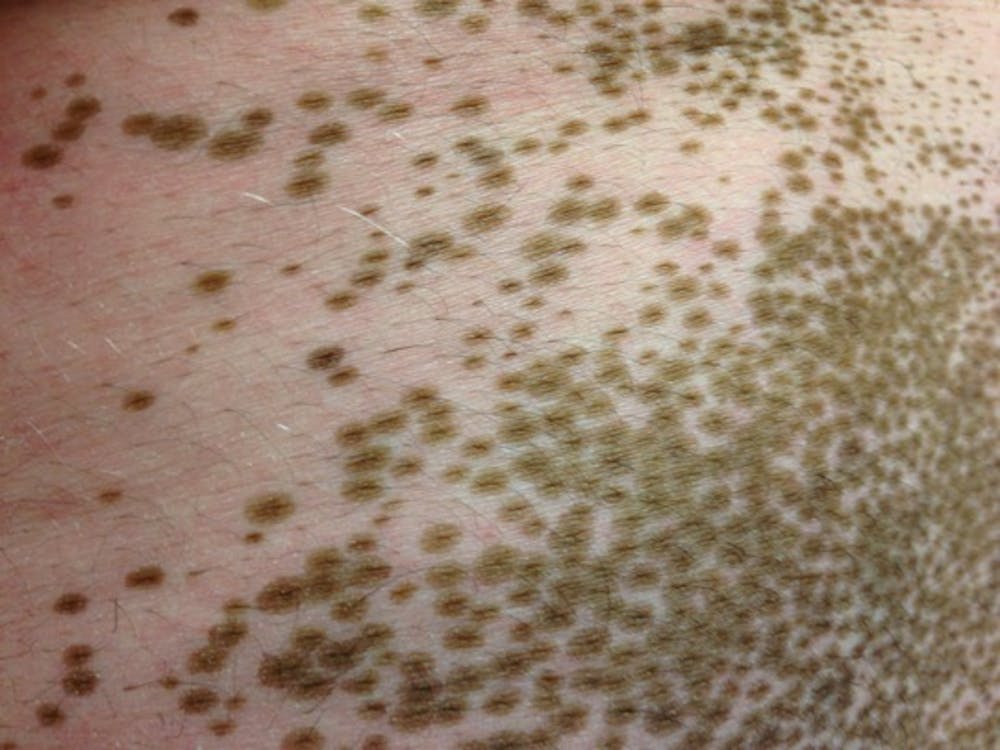
Existing treatments such as topical steroids and light therapy, which are used “off-label” because they have not been FDA-approved to treat vitiligo, can be effective for patients. These treatments reverse the disease by stimulating brown spots to appear around hair follicles within the affected white patches of skin. As these brown spots increase in number and size they merge until the white patch is replaced with normal skin color.

Current treatments for vitiligo involve stimulating pigment cell regrowth from the hair follicles, which results in brown dots around the hairs. As these brown dots grow and merge, the white patches disappear.
John Harris, CC BY-SA

This takes between one and two years, depending on the location of the body being treated. However, in most cases the white spots reappear at the same location, often within just one year after stopping the treatments. This recurrence can be just as devastating as when the white patches first appeared.

We wanted to find out why these spots reappear. Our research team suspected that “memory” forms within the skin when the white spots first appear, so that the spots “know” where to return when treatments are stopped. Working separately, we and three other laboratories led by Liv Eidsmo, Mary Jo Turk, and Julien Seneschal searched for the source of this memory in the skin.

These three other labs first found cells in vitiligo skin from mice or humans that looked a lot like the memory cells that protect the skin from a second exposure to a viral infection, suggesting that the body “thinks” it is fighting a viral infection when it “misfires” at the patient’s normal cells, killing the pigment-producing cells in the skin called melanocytes and causing vitiligo. These cells are called “resident memory T cells.”

Because immune responses to a virus act in a similar way to immune responses that cause autoimmune diseases, it seemed reasonable that these cells might also be the source of this remaining disease memory in the skin.

Disease memory can be erased with new treatment

We used a technique called skin blistering to isolate skin and skin fluid directly from the spots of my vitiligo patients and isolate the disease-causing memory cells so we could analyze them more closely. Similar to the other labs, we also found the virus-like memory cells, and we were able to also determine that these cells specifically targeted the melanocytes. We hypothesized that if we could remove these memory cells from the skin using a new treatment, then treatments to repigment the skin would be long-lasting and possibly permanent.

We then tested our hypothesis on mice we specifically engineered to develop vitiligo. Like humans, mice also have memory T-cells so we looked for their “Achilles heel” to see if we could knock them out without harming other cells. Our team figured out that the vitiligo-causing memory cells require a special protein called “IL-15” to survive. We injected the vitiligo mice with an antibody that blocks the IL-15 protein from interacting with the memory cells.

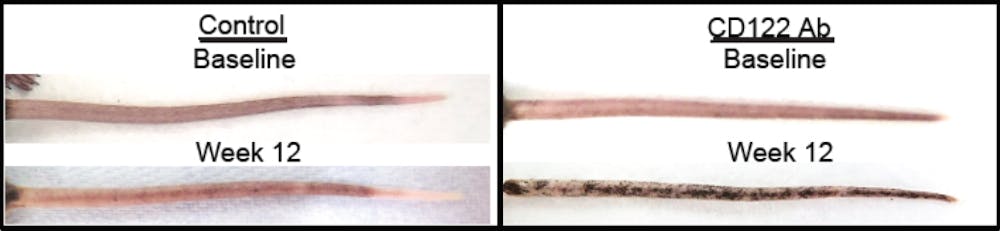
After just a few weeks we discovered that the treatment wiped out the memory cells from the mouse skin, allowing the brown pigment to return in a spotty pattern, just as we see in patients who respond to therapy. Importantly, just two weeks of antibody treatments caused repigmentation that lasted for months, suggesting this strategy, unlike existing treatments, might provide long-term benefit for vitiligo patients.

On the left is a mouse with vitiligo that received control antibody. After 12 weeks the tail remained white, without pigment. The mouse on the right also had vitiligo but was treated with the antibody to block IL-15 signaling. Twelve weeks later the tail was largely repigmented.
John Harris, CC BY-SA

Human clinical trials may begin next summer

During our study we also found that the vitiligo-causing memory T-cells in both mouse and human skin seem to require IL-15 more than other types of T cells – which means they are more sensitive to levels of this protein. This is important because it means we might be able to selectively remove the vitiligo-causing cells without harming other important immune cells too. In the treated mice, the vitiligo-causing cells became undetectable, but the other T-cells responsible for fighting infection remained unharmed and present, suggesting that our antibody therapy might be safer for the immune system than first thought.

Based on these results, we are working with the National Institutes of Health-funded Immune Tolerance Network (ITN) to develop a clinical trial to test this antibody treatment in human patients. We are hopeful that we can begin recruiting patients next summer.

The ConversationAlthough this antibody drug has only been proven to work in mice with vitiligo, we are excited to test it in humans because it could represent a significant advance over existing treatments. The partnership with the ITN will allow us not only to test whether it works for vitiligo patients, but also how it works. This will help us know when and in whom to use this new therapy.

John Harris, Associate Professor of Dermatology, University of Massachusetts Medical School

This article was originally published on The Conversation. Read the original article.

How does your body ‘burn’ fat?

Increasing the amount of exercise is one way to use the energy stored in fat cells, or to ‘burn’ fat.
HoonQ/Shutterstock.com

David Prologo, Emory University

Many of us may be considering “burning some fat” so we feel better in our bathing suits out on the beach or at the pool. What does that actually mean, though?

The normal fat cell exists primarily to store energy. The body will expand the number of fat cells and the size of fat cells to accommodate excess energy from high-calorie foods. It will even go so far as to start depositing fat cells on our muscles, liver and other organs to create space to store all this extra energy from calorie-rich diets – especially when combined with a low activity lifestyle.

Historically, fat storage worked well for humans. The energy was stored as small packages of molecules called fatty acids, which are released into the bloodstream for use as fuel by muscles and other organs when there was no food available, or when a predator was chasing us. Fat storage actually conferred a survival advantage in these situations. Those with a tendency to store fat were able to survive longer periods without food and had extra energy for hostile environments.

But when was the last time you ran from a predator? In modern times, with an overabundance of food and safe living conditions, many people have accumulated an excess storage of fat. In fact, more than one-third of the adult population in the United States is obese.

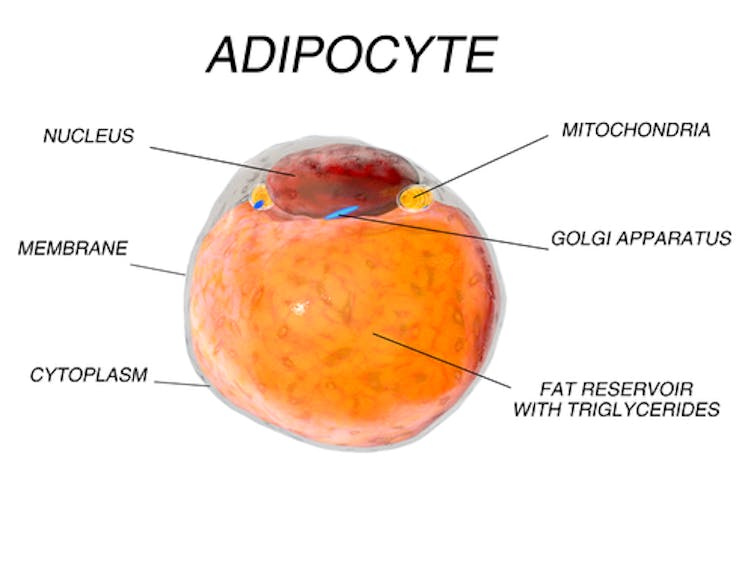
The major problem with this excess fat is that the fat cells, called adipocytes, do not function normally. They store energy at an abnormally high rate and release energy at an abnormally slow rate. What’s more, these extra and enlarged fat cells produce abnormal amounts of different hormones. These hormones increase inflammation, slow down metabolism, and contribute to disease. This complicated pathological process of excess fat and dysfunction is called adiposopathy, and it makes the treatment of obesity very difficult.

A fat cell is loaded with triglycerides, or fatty deposits, and does not resemble other cells in our body.
Pavel Chagochkin/Shutterstock.com

When a person begins and maintains a new exercise regimen and limits calories, the body does two things to “burn fat.” First, it uses the energy stored in the fat cells to fuel new activity. Second, it stops putting away so much for storage.

The brain signals fat cells to release the energy packages, or fatty acid molecules, to the bloodstream. The muscles, lungs and heart pick up these fatty acids, break them apart, and use the energy stored in the bonds to execute their activities. The scraps that remain are discarded as part of respiration, in the outgoing carbon dioxide, or in urine. This leaves the fat cell empty and renders it useless. The cells actually have a short lifespan so when they die the body absorbs the empty cast and doesn’t replace them. Over time, the body directly extracts the energy (i.e., calories) from food to the organs that need them instead of storing it first.

The ConversationAs a result, the body readjusts by decreasing the number and size of fat cells, which subsequently improves baseline metabolism, decreases inflammation, treats disease, and prolongs lives. If we maintain this situation over time, the body reabsorbs the extra empty fat cells and discards them as waste, leaving us leaner and healthier on multiple levels.
David Prologo, Associate Professor, Department of Radiology and Imaging Sciences, Emory University

This article was originally published on The Conversation. Read the original article.

The latest blood pressure guidelines: What they mean for you

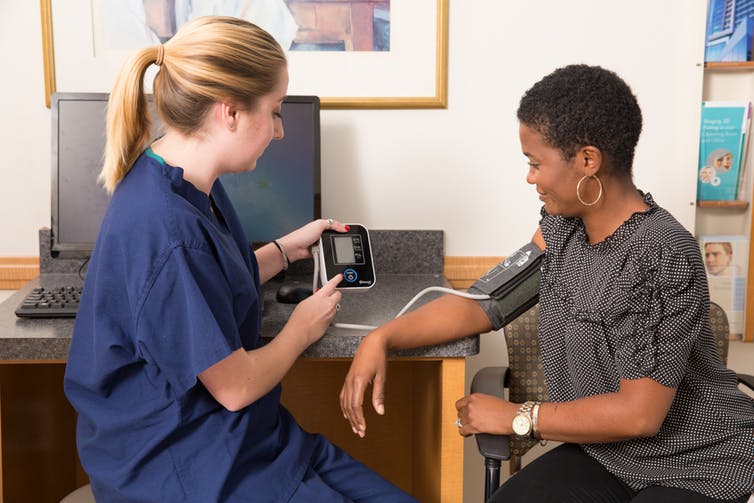
An accurate reading is essential to detect high blood pressure. This photo shows optimal procedures, including the supported arm, no clothing on the arm and uncrossed legs.
The American Heart Association., CC BY-SA

John Warner, UT Southwestern Medical Center

Updated blood pressure guidelines from the American Heart Association mean that many more Americans, notably older people, are now diagnosed with high blood pressure, or hypertension. This may sound like bad news, but the new guidelines highlight some important lessons we cardiologists and heart health researchers have learned from the latest blood pressure studies. Specifically, we have learned that damage from high blood pressure starts at much lower blood pressures than previously thought and that it is more important than ever to start paying attention to your blood pressure before it starts causing problems.

High blood pressure accounts for more heart disease and stroke deaths than all other preventable causes, except smoking.

As president of the AHA and a cardiologist, I completely support the latest guidelines. I know they will save lives, especially when blood pressure is accurately checked and when people make therapeutic lifestyle choices to lower their blood pressure.

How high blood pressure damages

High blood pressure, which occurs when the force of blood pushing against blood vessel walls is too high, is similar to turning up the water in a garden hose – pressure in the hose increases as more water is blasted through it. The added pressure causes the heart to work too hard and blood vessels to function less effectively. Over time, the stress damages the tissues within blood vessels, which can further damage the heart and circulatory system.

The AHA, the American College of Cardiology and nine other health professional organizations reviewed more than 900 studies as part of a rigorous review and approval process to develop this first update since 2003 to comprehensive U.S. high blood pressure guidelines.

Here’s what’s new:

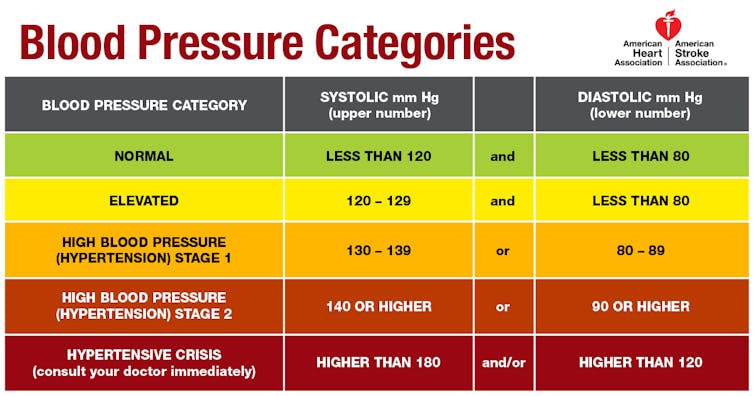
  1. High blood pressure, previously defined as 140/90 mm Hg or higher, is now defined as 130/80 mm Hg or higher. This change reflects the latest research that shows health problems can occur at those lower levels. Risk for heart attack, stroke and other consequences begins anywhere above 120 mm Hg (for systolic blood pressure, the top number in a reading), and risk doubles at 130 mm Hg compared to levels below 120.
  2. Blood pressure in adults will be categorized as normal, elevated, stage 1 hypertension or stage 2 hypertension. The category “prehypertension” is no longer used; it previously referred to blood pressures with a top number (systolic) between 120-139 mm Hg or a bottom number (diastolic) between 80-89 mm Hg. People with those readings are now categorized as having either Elevated or Stage I hypertension.
  3. Determination of eligibility for blood pressure-lowering medication treatment is no longer based solely on blood pressure level. It now also considers a patient’s risk of heart disease or stroke over the next 10 years, based on a risk calculator. For people with blood pressure higher than 140/90 mm Hg, medication is recommended regardless of risk level.
New blood pressure guidelines from the American Heart Association.
CC BY-SA

Putting the guidelines to work

Hypertension is known as the “silent killer” because often there are no obvious symptoms. The only way to know whether you have it is by having your blood pressure measured. Accurate blood pressure measurement is critical to a correct diagnosis.

The guidelines emphasize use of proper technique to measure blood pressure, whether taken by a health care professional in the clinic or by the patient using a home blood pressure monitoring device. Blood pressure levels should be based on an average of two to three readings on at least two different occasions.

A number of common errors can inflate a reading. These include having a full bladder, slouching with unsupported back or feet, sitting with crossed legs, or talking while being measured; using a cuff that is too small or wrapping the cuff over clothing; and not supporting the arm being measured on a chair or counter to keep it level with the heart.

An accurate reading is critical to a correct diagnosis, faster treatment and the most appropriate care.

The lower threshold for a diagnosis of high blood pressure increases the percentage of U.S. adults (ages 20 and older) who have the condition, from approximately 1 in 3 to nearly half (46 percent).

Even with the new threshold, the percentage of U.S. adults for whom medication is recommended (along with lifestyle management) will increase only slightly. Most of the people who are newly diagnosed with high blood pressure will be advised to make lifestyle changes to shift their blood pressure into a healthy zone.

The promise of healthy lifestyle changes

Exercise is an important part of keeping blood pressure low.
Pikselstock/Shutterstock.com

Damage to blood vessels begins soon after blood pressure is elevated. Early intervention can help prevent problems, slow damage that has already started and lower the risk for a heart disease or stroke. Lifestyle changes should be on the front lines of efforts to tackle the high blood pressure epidemic.

Here are some of the best proven nondrug approaches to prevent and treat high blood pressure:

  • Lose weight. For each kilogram lost, systolic blood pressure is expected to fall by about 1 mm Hg.
  • Eat better. Choose a dietary pattern rich in fruits vegetables, whole grains, and low-fat dairy products, reduced in saturated and total fat, lower in salt (aim to cut current intake by 1,000 mg/day sodium), and rich in potassium (aim for 3,500-5,000 mg/day, focusing on potassium-rich foods such as bananas, potatoes, avocados and dark leafy vegetables).
  • Move more. Get 90-150 minutes per week of both aerobic physical activity and resistance training.
  • Moderate alcohol intake. Limit to one drink or fewer per day for women and two drinks or fewer per day for men.

Personal responsibility for one’s health behaviors is important, but a number of other complex, interrelated aspects of the physical, social and policy environments influence these behaviors.

The ConversationPublic health practices and policies leading to changes in systems and environments support individuals’ efforts to make healthy lifestyle choices. For example, well-maintained sidewalks, bike lanes and parks support physically active lifestyles, and healthier food options in corner stores, vending machines and other public places promotes better eating habits. Community-based efforts can shift social norms and help transform the environments where behaviors occur to make healthier choices easier – more accessible, affordable, and attractive – for everyone.



John Warner, Executive Vice President, Health Affairs, UT Southwestern Medical Center

This article was originally published on The Conversation. Read the original article.

My cancer is in remission – does this mean I’m cured?

We only know if a cancer has been cured in hindsight.
Photo by Kaylee Eden on Unsplash

Ian Olver, University of South Australia

So you’ve been through cancer treatment and your doctor has called you in for “some good news”. Satisfied, she tells you your cancer is “in remission.”

What does this mean? Are you cured? Is the cancer gone forever? And what about all those stories you’ve heard of someone who thought they’d “won the battle” – but then their cancer came back?

Detecting cancer

Your cancer is in complete remission when, after treatment, no cancer can be detected. The term “cure” can only be used in hindsight. Commonly, years after the cancer has gone into remission, if it has not returned (or relapsed), it is said to have been cured.

However, a secondary cancer could occur if the same conditions that triggered the first are present.


Read more:
Explainer: what is cancer?


When a cancer can no longer be detected, it’s cured only if the treatment has killed every cancer cell. But it’s difficult to know if that’s the case due to our inability to detect small amounts of cancer.

A skilled specialist may be able to feel a breast lump that is half-a-centimetre wide. A plain chest X-ray can be expected to detect cancers from 1cm wide. And a CT scan will detect smaller cancers to a few millimetres.

But a cancer 1cm across on a scan has about 100 million cancer cells; even a 0.5cm cancer has about 10 million cells. A 1mm cancer, which would not show up on scans, has 100,000 cancer cells.

So, even when a cancer can no longer be seen and is no longer causing symptoms, there can still be millions of cells remaining. They can keep growing and eventually the cancer will be large enough to be detected again. That’s when the cancer is said to have relapsed.

We don’t always know if all the cancer cells have been killed.
from shutterstock.com

Some cancers, like testicular cancer, produce proteins (alpha FP and Beta HCG) that can be measured in blood. Measuring these is more accurate than scans in detecting small amounts of cancer.

Better still, chronic myeloid leukaemia (CML) – a rare form of leukaemia – has a characteristic genetic abnormality, which a very sensitive blood test can detect. This is helpful in determining whether a treatment has eradicated microscopic disease. The holy grail would be to develop such sensitive blood tests for every cancer.


Read more:
A new blood test can detect eight different cancers in their early stages


Additional therapies

Because we can’t tell whether remission means cure for most cancers, treatment strategies have been devised to increase the likelihood of cure. If a cancer is being treated with chemotherapy and becomes undetectable, further courses will be given to continue to reduce the remaining microscopic disease.

Some cancers, like breast and bowel cancer, where there is no visible disease after surgery, are given additional treatment in case some cells are still present near the operation site or have spread more widely through the bloodstream. Radiotherapy is given after the cancer has been removed by surgery to kill any remaining cells in the breast.

When it comes to brain cancer, it’s difficult to know if it has been completely cleared. The extent of surgery is limited because of the damage to normal tissues and function, and we don’t have very effective therapies to follow up the surgery. This is why it’s so difficult to cure.


Read more:
Three charts on: brain cancer in Australia


Chemotherapy, hormone therapy (for breast cancer) or both are given to kill any cells that might have escaped to more distant sites. Although we can’t see the cancer shrinking with the additional (adjunct) treatment, we know from trials comparing patients who receive additional treatment with those who do not that the additional treatment results in more patients being cured.

Chemotherapy, hormone therapy or both are given to kill any cells that might have escaped to more distant sites.
from shutterstock.com

It is common to use multiple types of treatment – surgery, radiotherapy or drug therapy – to improve the chances of a cure.

Chemotherapy may not be able to kill all of a cancer because it kills cells only when they are dividing, which means resting cells escape. Only a percentage of cells are dividing at any one time. In cancer that percentage is higher than in most normal tissues, so cancer suffers more damage than normal tissues with chemotherapy. Multiple doses might catch the resting cells when they begin to divide.

Another problem is that, after initially shrinking some of the cancer, some cells are found to be resistant, or become resistant, to the chemotherapy and are left untreated. Drug combinations are given as cells resistant to one drug might be susceptible to another.


Read more:
Explainer: what is chemotherapy and how does it work?


Five-year outcomes

It’s common when reporting cancer outcomes to compare the five-year survival rate, which is the percentage of patients who survive five years after diagnosis. Five years is a convenient interval at which everyone can collect statistics so comparisons can be made between cancers – or the outcomes of cancers between treatment centres, states or countries.

As it happens, with many cancers in remission, to have survived five years does mean they are probably cured. But there are differences for different cancer types.

A person diagnosed with an aggressive lymphoma whose cancer achieves remission is most likely to have been cured if the cancer has not returned in two years. This is because any residual lymphoma would be expected to regrow rapidly.

The opposite is the case for breast cancer. Although the chance of relapse after complete remission is greatest in the first two years and becomes smaller over time, and the five-year survival rate is 90%, relapses have been recorded up to 20 years later.

It is important to note, though, that survival rates have greatly improved over time and are always improving. In the 1970s, only one cancer patient in three made it through the first five years after diagnosis. Today, this figure is around 70%, and exceeds 85% for some cancers that were previously fatal.

The ConversationSo, remission might mean cure but we only know that over time.
Ian Olver, Director, University of South Australia Cancer Research institute, University of South Australia

This article was originally published on The Conversation. Read the original article.

Uganda’s new sex education framework will do more harm than good

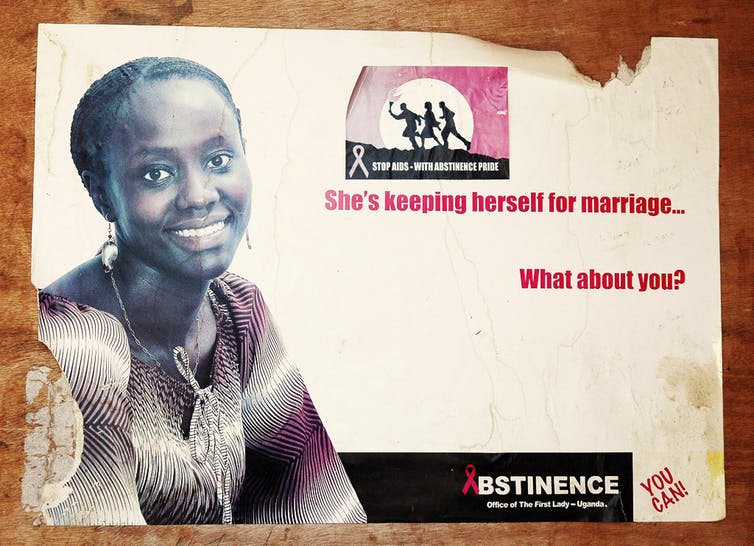
Abstinence campaign posters in Uganda.
Flickr/Jake Brewer

Billie de Haas, University of Groningen

Uganda has launched its first ever guideline on sex education. The National Sexuality Education Framework 2018 aims to provide a formal, national direction for sex education within Uganda’s schools, ensuring that all programmes adhere to the same approach.

The problem is that Uganda’s society holds very traditional values. This is reflected in the country’s policies and laws, like the “anti-Gay law” which came into force in 2014 and criminalises homosexuality.

As a result of this social conservatism, the new sex education framework is based on religious and cultural values that instruct abstinence only teaching. Students are taught the virtue of premarital abstinence and marital faithfulness. They are also taught traditional gender roles for men and women and that masturbation and same-sex sexual relationships aren’t normal.

This formalises what has already been happening. Uganda has taken an abstinence-only approach in schools for a long time. The framework just makes it a matter of national policy.

But it doesn’t fit the reality. Many young people are already sexually active. We know this from the high rate of pregnancies and unsafe abortions in the country. One of the leading causes of death and disability among young Ugandan women are pregnancy-related.

To understand what policies would make more sense for the sexual and reproductive health of young people, I conducted research among students and sex education teachers in secondary schools in Kampala, Uganda’s capital, between 2008 and 2013.

My findings confirm that Uganda’s abstinence-only approach is problematic for a number of reasons. It limits students’ choices and it prevents them from trusting, accessing and using contraception. This in turn puts them at a higher risk of pregnancy, sexually transmitted infections and unsafe abortions.

The framework also shelters students from understanding and questioning harmful gender roles and stigmatises students who don’t adhere to society’s morally-accepted norms and values.

Safe sex strategies

Uganda has incorporated sex education into primary and secondary schools for over 15 years. It was introduced as one of the responses to the HIV/AIDS epidemic, and so focused on prevention.

The government implemented a programme called the Presidential Initiative on AIDS Strategy for Communication to Youth. This programme received a lot of international criticism for only providing the “abstinence” option to students, as opposed to one which teaches condoms and other contraception use as well.

Because of this, non-governmental organisations also started implementing comprehensive approaches to sex education in Ugandan schools. These aimed to provide positive, accurate and complete information about sexuality and to include discussions about gender, relationships and homosexuality.

When the Ugandan government realised that some of these approaches were teaching homosexuality, it decided to launch the new framework.

But my research shows that this could do more harm than good. Research from elsewhere shows that sex education programmes are more effective when they promote contraception because it allows young people who are not abstaining to have safe sex. Teenagers need complete, accurate information to protect themselves against unwanted pregnancies and sexually transmitted infections, including HIV.

Impact of policy

I conducted in-depth interviews, held focus group discussions and observed lessons with 55 students and 40 teachers.

My findings confirm that Uganda’s moral approach means many students either don’t use contraception or don’t use it properly. This puts them at risk of pregnancy or infection. For instance, some said that they had learned condoms can break easily and that hormonal contraception, like the pill, can make them infertile or have a baby with disabilities. Many indicated that a condom is only 99% safe and that they cannot trust that 1%.

The findings also showed that abstinence-only education does not acknowledge structural factors, like gender and power relations, which make young people feel pressured to live up to gender norms. This could mean they become vulnerable to unsafe sexual practices, such as transactional sex whereby they exchange sex in return for money, gifts or school fees.

As for the teachers, I found that their personal values – and whether they think comprehensive sex education is good for the students or not – isn’t an issue for all of them. Many felt that they were held back by the reality of the school system: certain content cannot be taught, and teachers fear they may lose their job if they deviate from the norm.

What can be done

Because the new framework means that morality, justified by culture and religion, will continue to be institutionalised in the schools’ regulations and curricula, teachers will continue with the abstinence-only approach.

This presents a challenge for those working on sex education. They will need to think, and work, outside the box to ensure that young people in countries like Uganda can enjoy their sexual and reproductive health and rights despite conservative policies.

The ConversationIt is possible. In 2014 Burundi adopted a national module for comprehensive sex education in schools which meets international standards. Previously, sex and sexuality was a taboo subject, and, like Uganda, contraception was frowned upon. However, reforms in the educational system created opportunities to adopt a more comprehensive approach. This was partially driven by Burundi’s “Vision 2025” which flags high population growth as a barrier to long term development. Access to family planning was perceived as one of the key strategies to curb rapid growth.

Billie de Haas, Assistant Professor of Population Studies, University of Groningen

This article was originally published on The Conversation. Read the original article.