How hepatitis became a hidden epidemic in Africa

Fanny Chabrol, Institut national de la santé et de la recherche médicale (Inserm)

The five strains of viral hepatitis (A, B, C, D and E) affect 400 million people around the world. Hepatitis B and C are the most deadly; these infections are blood borne, transmitted mainly through unsafe medical practices or injection drug use.

International awareness has grown following activist mobilisation denouncing the exorbitant prices of new drugs that can cure hepatitis C such as Solvadi, priced at US$1,000 a pill.

Viral hepatitis is a global epidemic with distinct regional patterns. In Europe, hepatitis C is mostly associated with injecting drugs but on the African continent, it is a generalised epidemic and a major public health issue.

In both 2010 and 2014, the World Health Organisation (WHO) called for action on the diseases and has since produced guidelines for testing for hepatitis B and C.

The case of viral hepatitis sheds light on the key challenges faced by health systems in Africa in relation to the prevention of infection, barriers to accessing care and treatments and social and economic equity.

A deadly epidemic

It is estimated that 100 million people are affected by chronic hepatitis B in Africa, most of whom don’t know they have the infection; 19 million adults have hepatitis C.

Despite a lack of accurate epidemiological data at national levels, various estimations put hepatitis B prevalence at around 8-10% of the population in many countries. It is a generalised epidemic, not confined to specific segments of the population or high-risk groups.

This epidemic is even more worrying when we consider how hard it is to get treated – only 1% of chronic carriers can access treatment. When patients test positive for hepatitis they must undergo a series of biological and molecular tests that are, at the moment, unacceptably expensive in Africa.

It costs between €200 and €400 to have a complete pre-therapeutic assessment for hepatitis B or C in Cameroon and around €210 for an assessment for hepatitis B in Burkina-Faso.

Pharmaceuticals, Am Timan market, Chad. Abdoulaye Barry/MSF

After these tests, very few patients make it to the antiretroviral treatments. which are available for HIV patients but not for those affected by hepatitis B. In the case of hepatitis C, a single injection of pegylated interferon can cost as much as €230 in Côte d’Ivoire or Cameroon, and patients need 46 injections minimum.

If a hepatitis patient cannot access regular treatment, they end up hospitalised, affecting entire families both emotionally and financially. The people who die young of the diseases represent the workforce in many countries. As in the early years of AIDS, the shape of Africa’s future is affected by these infections.

A history of neglect

And just as the AIDS epidemic embodied colonial violence and weak health systems, so does viral hepatitis.

In Cameroon, the hepatitis C virus was transmitted through colonial medical campaigns in the late 1950s to 1960s. In Ebolowa, it is associated with intravenous treatment of malaria that today’s older people received when they were young; hepatitis C therefore affects more than 50% of people older than 50 in certain regions.

Group shot of seven Europeans at the opening of the first Mengo Hospital, Uganda, 1897. Wellcome

Transmission of hepatitis C might not be acute today, but certain medical procedures do carry the risk of infection. In Cameroon, those who undergo repeated blood transfusions are at greater risk of contracting HCV, just as health workers, exposed in the workplace.

Viral hepatitis also sheds light on global healthcare priorities. The hepatitis B vaccines arrived late to the African continent: though the extent of hepatitis B and liver cancer were known in the late 1970s in Senegal and stimulated the development of a vaccine, once manufactured this vaccine was not made accessible in Africa until mid-1990s. Even today, populations are not fully covered by vaccination.

In the 1980s the HIV epidemic obscured the extent of hepatitis. Today, the free antiretroviral drugs provided through the support of Global Fund against HIV, TB and malaria are perceived as unfair by many of those affected by hepatitis.

People’s science

In the fight against hepatitis, many lessons can be drawn from HIV, as well as from the recent Ebola outbreak.

Massive international interventions cannot just target access to drugs and biomedical interventions. Chances of surviving Ebola were considerably increased when patients could access basic measures, including intensive care and rehydration.

And instead of trying to change people’s behaviour, history shows it is wiser to understand the social, economic and political context of epidemics and to trust local knowledge and experience. In his recent book on Ebola, anthropologist Paul Richards asserts that the epidemic ended not just because of international support, but also thanks to community work, even despite the lack of effective treatment.

Communities responded, and they produced their own science of the disease. They mobilised techniques to protect themselves, for instance by using plastic bags or other materials while attending to their sick loved ones.

Freetown Ebola burial team carefully lowers the corpse of a small child into its grave. Simon Davis/Dfid, CC BY-SA

Today, in places like Cameroon, many physicians, patients and families have similarly developed ways to cope with hepatitis, jaundice or liver pathologies. Their insight and experience should be at the centre of future policies.

Many professionals deplore the lack of universal protection from hepatitis transmission and the risk of infection in hospitals is high. Health workers are not immunised correctly, and they lack critical equipment such as gloves and sterilising material.

Another efficient way to prevent transmission is to vaccinate for hepatitis at birth instead of starting at six weeks.

There is also an urgent need to address pain management and palliative care as the complications of hepatitis (liver cancer and cirrhosis) can be very debilitating and inhumane experiences, often leading to death.

Urgent action

Across the African continent, hepatitis does not today receive the same kind of attention from NGOs and civil society as HIV did in the 2000s.

But other forms of mobilisation are emerging among clinicians, as national professional associations combine scientific and medical work and advocate to their respective governments for sustained pan-African collaboration.

Democratic Republic of Congo. Young people are vaccinated to prevent measles, hepatitis and whooping cough. MSF

Clinicians in Africa and in Europe are also joining forces through scientific and medical cooperation and are calling for action to fight these unacceptable global inequalities. Their insights should be combined with strong social support for patients and their families.

The viral hepatitis response also requires urgent infrastructure interventions to ensure access to clean water, hospital hygiene and blood safety.

The WHO Regional Committee for Africa promotes a public health approach that includes vaccination at birth, integration of testing services and linkage to care.

If making drugs available is a priority, it is also imperative to avoid catastrophic health expenses and include diagnostic tests, treatments and follow-up tests in national projects for universal health coverage.

Fanny Chabrol, Postdoctoral fellow in Global health, Institut national de la santé et de la recherche médicale (Inserm)

This article is republished from The Conversation under a Creative Commons license. Read the original article.

DRC and its neighbours mobilise resources to tackle Ebola outbreak

USAID/flickr

Chikwe Ihekweazu, UCL

At least 17 people have died in an outbreak of Ebola Virus Disease in the north west of the Democractic Republic of the Congo (DRC) in the town of Bikoro. Ebola is endemic to the country. But the number of deaths in a short period is cause for concern. The Conversation Africa’s health and medicine editor Candice Bailey spoke to Chikwe Ihekweazu in Nigeria.

What are the critical steps that the DRC needs to take now that the outbreak has been confirmed?

Health authorities have learnt many valuable lessons from previous Ebola outbreaks – particularly the outbreak in 2014 in West Africa where more than 11 000 people died.

Because the DRC has had so many outbreaks it’s developed the capacity to deal with new ones. But, as with every other disease that threatens global health security, it is critical for nearby countries to collaborate with it to ensure the outbreak stays under control.

Bringing the outbreak under control has two important phases. Firstly, health authorities in the country must define its scale. Secondly, they have to interrupt its chains of transmission as quickly as possible.

Our colleagues at the Centre for Disease Control in the DRC are currently evaluating the people who are infected. There are several pieces of information that they want to establish: when and where people were infected, where they they’ve been – or travelled to – since being infected. This will give them a better understanding of the extent of the person-to-person transmission.

Once this has been established, the government can respond. Several control activities will be initiated almost immediately covering both prevention as well as treatment. From a prevention perspective, it’s important for the government to engage with communities so that people understand the outbreak and how quickly the virus is able to spread.

From a treatment perspective, health authorities need to set up treatment centres and access to laboratory diagnosis. Given the death rate, epidemiologists will have to be on hand to carry out detailed investigations on the origins of the outbreak. This is the only way the chain of transmission can be broken.

The DRC has had numerous outbreaks of Ebola. What challenges does the country face handling a virus like this?

The DRC has had more Ebola virus outbreaks than any other country in the world. Over the past 10 years there have been five: 2007, from 2008 to 2009, 2012, 2014 and 2017.

As a result the country has gained a lot of experience in how to control the disease. But there are still many unknowns. One of the most critical gaps is understanding the transmission dynamics of the virus from its animal reservoir to humans.

The country has good systems for diagnosing the disease – its reference laboratory was able to test and confirm cases within 24 hours. But when it comes to surveillance and monitoring its systems are weak. Stronger surveillance systems would ensure that cases were reported early, and a country-led response mounted.

Nigeria is on high alert following the outbreak in the DRC. What are the concerns?

Nigeria, as well as other countries in Africa are at medium risk, according to a classification by the World Health Organisation.

Nigeria has learnt that it is better to be prepared than to be caught unaware.
To mitigate the risk, the country’s Centre for Disease Control has taken extra precautionary measures. This has included placing its emergency operations centre on alert and issuing a public health advisory. In addition, the national port health services have heightened screening at points of entry.


Read more:
How Nigeria beat the ebola virus in three months


There are also protocols in place to ensure that if a case is suspected, it’s detected early and response activities are initiated immediately.

It’s important for countries to ensure that their citizens are well aware of the risk the disease poses. Nigerian health authorities are working hard to ensure that this happens.

What steps will Nigeria take to help the DRC?

The ConversationDuring the 2014 Ebola outbreak, the African Union arranged for health workers from Nigeria to go to Liberia and Sierra Leone. As a result of this initiative, Nigerian health authorities have a large cohort of well-trained resources that can be deployed to support the country if that’s needed.

Chikwe Ihekweazu, Senior Honorary Lecturer on Infectious Diseases, UCL

This article was originally published on The Conversation. Read the original article.

People with epilepsy aren’t protected in Africa. What needs to be done

Shutterstock

Jacob Mugumbate, University of Wollongong

In October 2017 Abdul Matola was stoned and burnt to death in Malawi after being accused of being a “bloodsucking vampire”. Matola had lived with uncontrolled epilepsy -– a highly treatable and non-infectious condition characterised by recurring seizures.
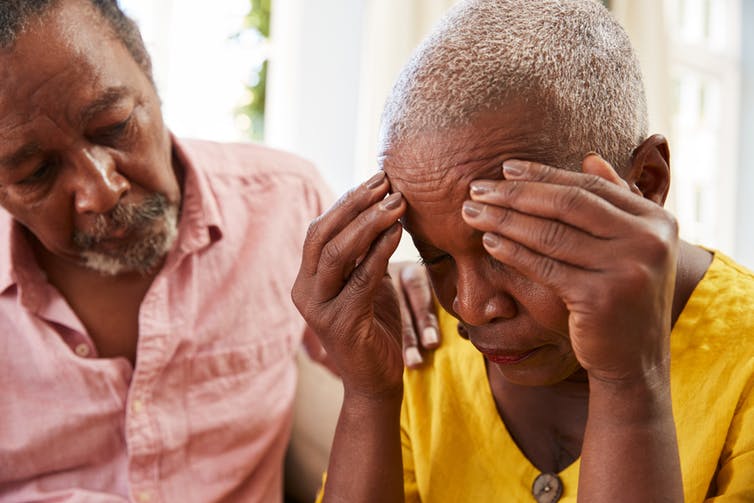
When he was caught by the mob, he was still recovering from a seizure in his garden. He was weak and not fully conscious.

Some Malawians, as well as people from other African countries, believe that epileptics could be witches or possessed by an evil spirit. People with epilepsy have been accused of eating human flesh, sucking human blood and committing various crimes.

Epilepsy is the most common serious chronic brain disorder in the world. More than 50 million people are affected by the condition. A fifth live in Africa. About 3% of Malawi’s of 18 million people has epilepsy.

Matola’s death elicited an outcry from the public. Local epilepsy awareness organisations issued a petition calling on the government to intervene. Over the following weeks and months several people were arrested.

But beyond the arrests, the government in Malawi – like many others across the continent – have done little to institute policies that improve awareness and protect people who have epilepsy.

Matola’s death exposed levels of ignorance about epilepsy that are commonplace in many communities across the continent. It highlighted the vulnerabilities that people with the condition face on a daily basis.

More importantly, it showed that there are gaps in the treatment offered to epileptics. These include a lack of awareness and a shortage of medicines, care services and facilities.

Unless governments on the continent increase awareness about epilepsy and create policies that protect people who suffer from this disease, little will change.

Not enough action

In the last 20 years there has been two attempts to get governments across the world to improve awareness around epilepsy.

In 2000 the World Health Organisation spearheaded the Global Campaign against Epilepsy which developed treatment guidelines in resource poor countries and trained health workers on how to handle people with epilepsy.

Projects were implemented in Zimbabwe, Senegal, Brazil and China. Studies evaluating them proved that it was possible to treat and manage epilepsy successfully in poor resource settings using very few resources. But the studies also showed that the projects had very little impact and that a significant number of people with epilepsy were not getting services.

Then in 2015 the WHO adopted a resolution to address the health, social and public knowledge of epilepsy. Governments agreed to put epilepsy high on their agendas. And most African governments were signed up too.

But three years have passed since the resolution was adopted, and very little action has been taken by governments on the continent. Aside from a workshop attended by 21 countries in Ghana in 2015 not much has been done.

Government could, in fact, have taken the simple step of setting up teams to implement the resolution and to translate the policy into a programme of action. But this hasn’t been done.

Most of the advocacy efforts have been led by non-governmental organisations. But these have only taken place in only a few countries and there are no concrete results.

The challenge is that in most countries there is no office that coordinates epilepsy affairs. Other challenges include the fact that:

  • Support for the condition is inadequately funded,
  • Epilepsy falls under mental health and lacks proper short term or long term plans.

Where there is political will, these challenges are surmountable through an approach that involves major stakeholders and opinion leaders.

Building awareness

There are four steps that African governments should take to improve awareness around epilepsy. These would also address the risk of discrimination, disability or death associated with epilepsy.

Each country should form a national committee or task force to spearhead the implementation of the WHO’s resolution. This could mean reactivating teams that were established 20 years ago as part of the global campaign against epilepsy.

Countries could also develop a national epilepsy plan to implement the resolution. This should include measures to ensure sustained epilepsy awareness, training of health workers, research, funding, treatment guidelines, human resourcing, medicines supply, operation of the national task force and other issues. And it should include a national epilepsy fund to resource the plan.

In addition to acknowledging the needs of people with epilepsy and resourcing them, governments also need to help strengthen organisations that support people with epilepsy.

If these steps are taken epilepsy could be better understood in Africa and people with epilepsy could be protected and afforded an opportunity to lead productive lives.

The Conversation* Action Amos, Executive Director, Federation of Disability Organisations in Malawi (FEDOMA) for contributed to the writing of this article.

Jacob Mugumbate, Lecturer, University of Wollongong

This article was originally published on The Conversation. Read the original article.

Why Africa needs to start focusing on the neglected issue of mental health

The treatment gap for people living with mental illness in Africa is huge.
Shutterstock

Crick Lund, University of Cape Town

Mental health has historically been neglected on Africa’s health and development policy agenda. Faced with many challenges, including intractable poverty, infectious diseases, maternal and child mortality, as well as conflict, African political leaders and international development agencies frequently overlook the importance of mental health.

This trend is often compounded by three factors: ignorance about the extent of mental health problems, stigma against those living with mental illness and mistaken beliefs that mental illnesses cannot be treated.

Absence of treatment is the norm rather than the exception across the continent. The “treatment gap” – the proportion of people with mental illness who don’t get treatment – ranges from 75% in South Africa to more than 90% in Ethiopia and Nigeria.

Yet there are several reasons to give greater priority to mental health. These include the fact that doing so delivers other health benefits; that it helps tackle socioeconomic challenges; that there are economic benefits; and that human rights offences are reduced.

Mental and physical health are inseparable

Chronic non-communicable diseases such as hypertension and diabetes, as well as infectious diseases like HIV and tuberculosis, have high levels of co-morbidity with mental illness. This co-morbidity doesn’t only influence disability but also has direct consequences for mortality.

A study in Ethiopia showed that people living with severe mental illness – conditions like schizophrenia, bipolar mood disorder and severe depression – died 30 years earlier than the general population, mainly from infectious causes.

Maternal depression has also been shown to affect the development and growth of infants.

In addition, research shows that people living with mental illness or substance use disorders are more likely to become infected with HIV.

In a further twist, people with HIV have been shown to be twice as likely as the general population to be depressed. And treating them for depression improves adherence and boosts their immune systems.

Mental health and poverty

There are strong links between mental health and poverty. In a large review of 115 studies from 36 low and middle-income countries we found that poverty was strongly associated with common mental disorders. These included depression, anxiety and somatoform disorders (psychological disorders with inconsistent physical symptoms). The study included several African countries.

In addition, the relationship between mental health and poverty is cyclical. Conditions of poverty increase the risk of mental illness. This happens through the stress of food and income insecurity, increased trauma, illness and injuries and the lack of resources to cushion the blow of these events. Conversely living with a mental illness leads those affected to drift into poverty through increased healthcare expenditure, disability and stigma.

Human rights

People living with mental illness (particularly severe mental illness) are frequently stigmatised, shunned, and excluded from mainstream society. This is as true in Africa as it is in societies around the world.

Those with schizophrenia, bipolar mood disorder and epilepsy are frequently subjected to human rights abuses. They are often cast aside because of beliefs that psychosis or epileptic seizures are signs of demon possession or evil spirits. And they are denied access to life changing treatment.

There is hope

A range of mental health interventions across the continent are leading to clinical improvements.

Since the early 2000s, a series of randomised controlled trials in African countries have provided compelling evidence that mental health interventions are highly effective. These include pharmacological and psychological interventions. Many of these have used non-specialist health providers in local communities, reducing the cost of care.

In northern Uganda for example, scientists have shown significant improvements in depression and daily functioning by using group inter-personal therapy. These were delivered by local non-specialist facilitators.

In Zimbabwe primary care clinics in Harare have introduced a “Friendship Bench”, a counselling intervention delivered by lay health workers. Significant improvements in depression, anxiety, disability and health related quality of life have been noted.


Read more:
How a community-based approach to mental health is making strides in Zimbabwe


Mental health interventions also improve the economic circumstances of people and households affected by mental illness.

We’ve conducted a systematic review of interventions that break the cycle of poverty and mental illness. Most studies that evaluated the economic impact of these interventions showed how clinical and economic improvements went hand in hand.

As this new evidence emerges, the tide is beginning to turn. In April 2016, the World Bank and the World Health Organisation held a high level meeting in Washington DC titled “Out of the Shadows: Making Mental Health a global development priority”. This led to these two global bodies committing to the WHO global Mental Health Action Plan (2013-2020) and the World Bank’s recently established Mind, Behaviour and Development Unit.

The critical question is how evidence-based interventions can be taken to scale using existing health care systems, while maintaining quality.

This question has occupied the consortium of researchers working under the umbrella of Programme for Improving Mental Health Care since 2011 in Ethiopia, India, Nepal, South Africa and Uganda.

In a similar vein, studies are being conducted in low and middle-income countries by the Emerald consortium which is working in the five countries as well as Nigeria. The aim is to strengthen information systems, improve governance and calculate the costs of scaling up integrated packages of care.

A good investment

By neglecting mental health, it will be difficult to attain many of the Sustainable Development Goals related to poverty, HIV, malaria, gender empowerment and education.

Improving mental health is a means of unlocking development potential – a neglected link in the development chain in Africa. Investing in mental health means promoting resilience on the African continent. Mental health is both a means to social and economic development, and a worthy goal in itself.

The ConversationThis is an edited version of an article that appeared in the African Policy Review.

Crick Lund, Professor in the Alan J. Flisher Centre for Public Mental Health, Department of Psychiatry and Mental Health, University of Cape Town

This article was originally published on The Conversation. Read the original article.