What’s the difference between pandemic, epidemic and outbreak?

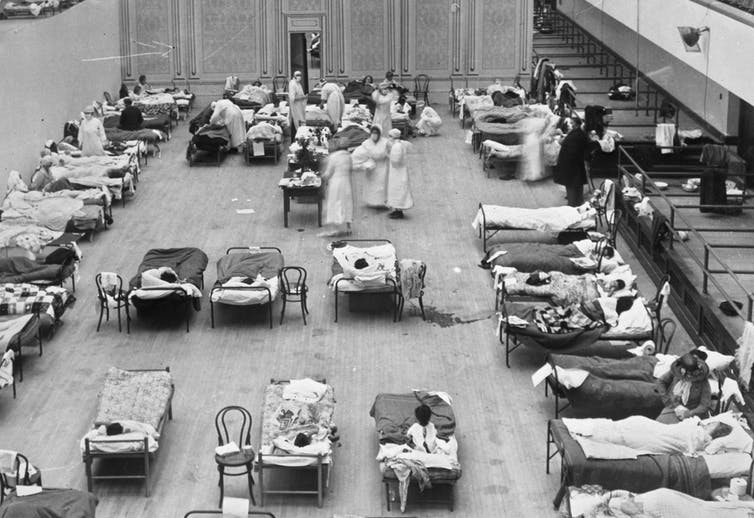
It’s a matter of scale. (Edward A. “Doc” Rogers/Library of Congress via AP

Rebecca S.B. Fischer, Texas A&M University

The World Health Organization has declared COVID-19 a pandemic. This is a landmark event. As an epidemiologist listening to the steady stream of conversation around the coronavirus, I’m hearing newscasters and neighbors alike mixing up three important words my colleagues and I use in our work every day: outbreak, epidemic and pandemic.

Simply put, the difference between these three scenarios of disease spread is a matter of scale.

Sign up to The Conversation

Outbreak

Small, but unusual.

By tracking diseases over time and geography, epidemiologists learn to predict how many cases of an illness should normally happen within a defined period of time, place and population. An outbreak is a noticeable, often small, increase over the expected number of cases.

Imagine an unusual spike in the number of children with diarrhea at a daycare. One or two sick kids might be normal in a typical week, but if 15 children in a daycare come down with diarrhea all at once, that is an outbreak.

When a new disease emerges, outbreaks are more noticeable since the anticipated number of illnesses caused by that disease was zero. An example is the cluster of pneumonia cases that sprung up unexpectedly among market-goers in Wuhan, China. Public health officials now know the spike in pneumonia cases there constituted an outbreak of a new type of coronavirus, now named SARS-CoV-2.

As soon as local health authorities detect an outbreak, they start an investigation to determine exactly who is affected and how many have the disease. They use that information to figure out how best to contain the outbreak and prevent additional illness.

Epidemic

Bigger and spreading.

An epidemic is an outbreak over a larger geographic area. When people in places outside of Wuhan began testing positive for infection with SARS-CoV-2 (which causes the disease known as COVID-19), epidemiologists knew the outbreak was spreading, a likely sign that containment efforts were insufficient or came too late. This was not unexpected, given that no treatment or vaccine is yet available. But widespread cases of COVID-19 across China meant that the Wuhan outbreak had grown to an epidemic.

COVID-19 was first noticed in Wuhan, China, but quicky spread across the globe. This map show the 110 countries with confirmed cases as of March 11. CDC

Pandemic

International and out of control.

In the most classical sense, once an epidemic spreads to multiple countries or regions of the world, it is considered a pandemic. However, some epidemiologists classify a situation as a pandemic only once the disease is sustained in some of the newly affected regions through local transmission.

To illustrate, a sick traveler with COVID-19 who returns to the U.S. from China doesn’t make a pandemic, but once they infect a few family members or friends, there’s some debate. If new local outbreaks ensue, epidemiologists will agree that efforts to control global spread have failed and refer to the emerging situation as a pandemic.

Terms are political, not just medical

Epidemiologists are principally concerned with preventing disease, which may be fundamentally different than the broader concerns of governments or international health organizations.

The WHO has declared only two pandemics in history – for influenza in 1918 and for influenza H1N1 in 2009. For weeks, epidemiologists like me have been calling the coronavirus a pandemic. From an epidemiological perspective, the WHO’s declaration is overdue. As of March 11, the official numbers count an excess of 120,000 cases in at least 114 countries. Eight countries, including the U.S., have more than 1,000 cases each, and community spread has been documented in several U.S. states.

Pandemic is the highest level of global health emergency and signifies widespread outbreaks affecting multiple regions of the world. However, the WHO statements remain hopeful that the pandemic can be controlled and the damage minimized by taking immediate aggressive steps.

The formal declaration of COVID-19 or any other infectious disease as pandemic tells governments, agencies and aid organizations worldwide to shift efforts from containment to mitigation. It has economic, political and societal impacts on a global scale, and the WHO takes extreme care when making this determination.

This formal declaration needn’t incite fear or cause you to stockpile surgical masks. It doesn’t mean the virus has become more infectious or more deadly, nor that your personal risk of getting the disease is greater. And it doesn’t mean that efforts to fight COVID-19 are being abandoned. But it is an historical event.

This is an updated version of an article originally published on March 5, 2020.

Rebecca S.B. Fischer, Assistant Professor of Epidemiology, Texas A&M University

This article is republished from The Conversation under a Creative Commons license. Read the original article.

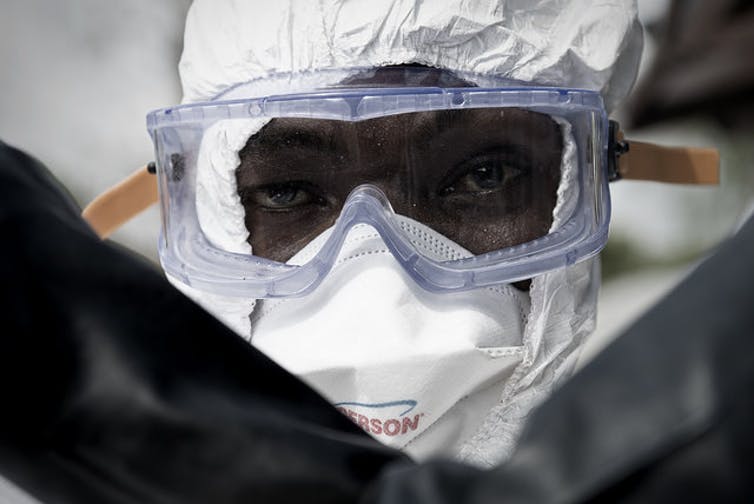
DRC and its neighbours mobilise resources to tackle Ebola outbreak

USAID/flickr

Chikwe Ihekweazu, UCL

At least 17 people have died in an outbreak of Ebola Virus Disease in the north west of the Democractic Republic of the Congo (DRC) in the town of Bikoro. Ebola is endemic to the country. But the number of deaths in a short period is cause for concern. The Conversation Africa’s health and medicine editor Candice Bailey spoke to Chikwe Ihekweazu in Nigeria.

What are the critical steps that the DRC needs to take now that the outbreak has been confirmed?

Health authorities have learnt many valuable lessons from previous Ebola outbreaks – particularly the outbreak in 2014 in West Africa where more than 11 000 people died.

Because the DRC has had so many outbreaks it’s developed the capacity to deal with new ones. But, as with every other disease that threatens global health security, it is critical for nearby countries to collaborate with it to ensure the outbreak stays under control.

Bringing the outbreak under control has two important phases. Firstly, health authorities in the country must define its scale. Secondly, they have to interrupt its chains of transmission as quickly as possible.

Our colleagues at the Centre for Disease Control in the DRC are currently evaluating the people who are infected. There are several pieces of information that they want to establish: when and where people were infected, where they they’ve been – or travelled to – since being infected. This will give them a better understanding of the extent of the person-to-person transmission.

Once this has been established, the government can respond. Several control activities will be initiated almost immediately covering both prevention as well as treatment. From a prevention perspective, it’s important for the government to engage with communities so that people understand the outbreak and how quickly the virus is able to spread.

From a treatment perspective, health authorities need to set up treatment centres and access to laboratory diagnosis. Given the death rate, epidemiologists will have to be on hand to carry out detailed investigations on the origins of the outbreak. This is the only way the chain of transmission can be broken.

The DRC has had numerous outbreaks of Ebola. What challenges does the country face handling a virus like this?

The DRC has had more Ebola virus outbreaks than any other country in the world. Over the past 10 years there have been five: 2007, from 2008 to 2009, 2012, 2014 and 2017.

As a result the country has gained a lot of experience in how to control the disease. But there are still many unknowns. One of the most critical gaps is understanding the transmission dynamics of the virus from its animal reservoir to humans.

The country has good systems for diagnosing the disease – its reference laboratory was able to test and confirm cases within 24 hours. But when it comes to surveillance and monitoring its systems are weak. Stronger surveillance systems would ensure that cases were reported early, and a country-led response mounted.

Nigeria is on high alert following the outbreak in the DRC. What are the concerns?

Nigeria, as well as other countries in Africa are at medium risk, according to a classification by the World Health Organisation.

Nigeria has learnt that it is better to be prepared than to be caught unaware.
To mitigate the risk, the country’s Centre for Disease Control has taken extra precautionary measures. This has included placing its emergency operations centre on alert and issuing a public health advisory. In addition, the national port health services have heightened screening at points of entry.


Read more:
How Nigeria beat the ebola virus in three months


There are also protocols in place to ensure that if a case is suspected, it’s detected early and response activities are initiated immediately.

It’s important for countries to ensure that their citizens are well aware of the risk the disease poses. Nigerian health authorities are working hard to ensure that this happens.

What steps will Nigeria take to help the DRC?

The ConversationDuring the 2014 Ebola outbreak, the African Union arranged for health workers from Nigeria to go to Liberia and Sierra Leone. As a result of this initiative, Nigerian health authorities have a large cohort of well-trained resources that can be deployed to support the country if that’s needed.

Chikwe Ihekweazu, Senior Honorary Lecturer on Infectious Diseases, UCL

This article was originally published on The Conversation. Read the original article.