Explainer: what is chemotherapy and how does it work?
From Shutterstock,
Nial Wheate, University of Sydney
Chemotherapy is the use of drugs to treat cancer in humans and animals. It is rarely used in isolation and is often paired with surgery, radiotherapy and immunotherapy, or a combination of these.
Chemotherapy works by causing cancer cells to undergo a type of forced suicide, called apoptosis.
The severe side effects associated with chemotherapy are due to the drugs’ poor selectivity for cancerous tissue over healthy tissue.
The future for chemotherapy lies in the development of safer and more targeted drugs, and in personalised medicine where chemotherapy is individually selected for each patient based on genetic profiling.
Further reading – How cancer doctors use personalised medicine to target variations unique to each tumour
How is chemotherapy used?
In Australia the treatment of different cancers is based on specific guidelines in the EviQ database published by the New South Wales state government and the Cancer Institute of NSW. These provide guidance on what drugs should be used for each cancer type, their dose, and what other treatments should be given.
Sometimes chemotherapy is used to shrink tumours before surgery or radiotherapy; this is called neo-adjuvant chemotherapy. Otherwise, chemotherapy is given after surgery or radiotherapy to mop up any remaining cancer cells. This is adjuvant chemotherapy.
The drug dose a patient receives is usually based on their body surface area, which is a number derived from a patient’s height and weight.
Further reading – Explainer: what is cancer radiotherapy and why do we need proton beam therapy?
How does it work?
Chemotherapy drugs are grouped into families based on how they affect cancer cells. For example, some drugs attack the cell’s DNA, where its generic code is stored, and stop it being copied and reproduced by the cell. In contrast, other drugs attack a component of cells called microtubules. These act as a type of skeleton which allows cells to hold their shape and move.
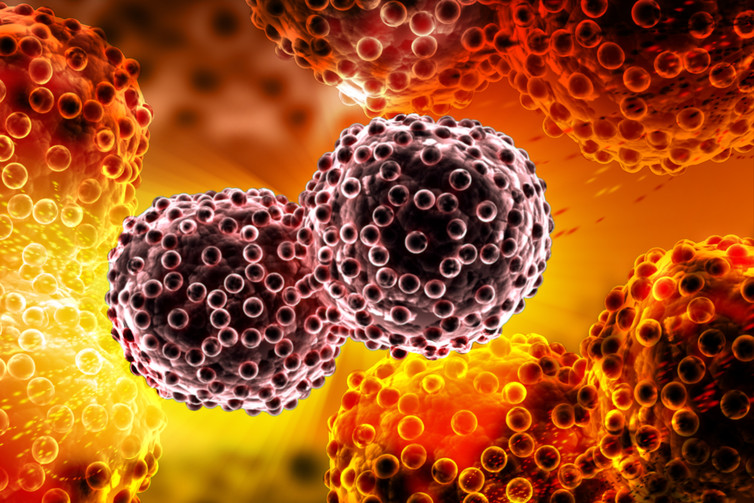
A common feature of all chemotherapy drugs is that they kill cancer cells through a process called apoptosis. This is where the drug does so much damage that the cell realises it can’t repair or function properly and shuts itself down.
from www.shutterstock.com
Where cancers continue to grow because they have become resistant to drug treatment, it is because they have found ways to repair, or get around, the damage caused by the drugs.
Where did we find the drugs?
Many people wrongly assume chemotherapy drugs are all synthetic and made in a laboratory, but many come from natural sources.
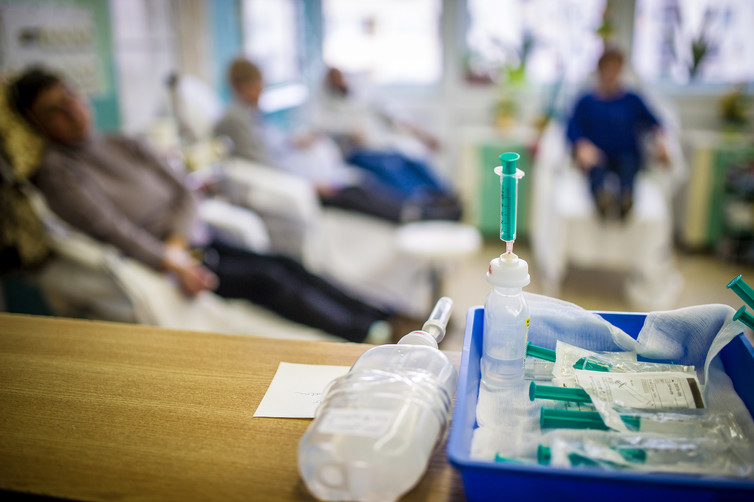
The anthracycline-based drug doxorubicin comes from a bacterium that was first found living in the soil around a 13th-century Italian castle, Castel de Monte. This drug acts by preventing DNA from being unzipped and is used to treat over 20 different types of cancer. The fluid in an IV bag that contains one of these types of drugs will be highly coloured; either red or blue.
The taxel-based drugs paclitaxel and docetaxel come from the bark of trees found only in North America. The drugs bind to microtubules and stop them coming apart, which is an essential process in cell replication. These drugs are used primarily to treat breast, lung and ovarian cancers and leukaemia.
The vinca alkaloid-based drug vinscristine comes from the flower of the perriwinkle plant, which grows on the island of Madagascar. Examples of cancers that are treated with vincristine include the mainly childhood cancers called neuroblastomas, lymphomas and leukaemia.

from www.shutterstock.com
Even synthetic drugs have interesting origins. The nitrogen mustard drugs were developed from chemical warfare agents. The platinum-based cisplatin drug was discovered by accident when a physicist was studying the effects of electric fields on bacterial growth.
Platinum drugs are used to treat ovarian, testicular and lung cancers. These drugs work by preventing cells from replicating and reading DNA.
Why the severe side effects?
Most patients who have chemotherapy will experience severe side effects. These may include nausea and vomiting, fatigue, tingling in their arms and legs, hearing loss, hair loss, poor kidney and liver function, and an increased susceptibility to infection.
These side effects arise because the drugs are poorly selective for cancers. They attack any part of the body that grows quickly. That includes hair follicles, the lining of the mouth, stomach and intestines, and bone marrow.
Because fetuses are also fast-growing cells, chemotherapy is very dangerous for pregnant women.

From www.shutterstock.com
Sometimes it is necessary to give patients additional drugs to treat side effects. For example, blood contains both red and white blood cells. The job of red cells is to carry oxygen whereas white cells are used to fight infections. Chemotherapy is known to cause a drop in many patients’ white blood cell levels, and so they need to be given antibiotics to ensure they don’t get an infection.
Last year, the NSW government funded and approved clinical trials to investigate the potential of medicinal cannabis for alleviating the nausea and vomiting side effects of chemotherapy.
The future of chemotherapy
Scientists are continually working to find better and safer chemotherapy drugs. As we learn more about the underlying biology of cancer, we can find targets inside cancer cells that are not found in normal cells. By designing drugs that target these differences we can create drugs that will be free from side effects.
Scientists are also working on better ways to deliver the drugs we currently use. This includes putting the drugs in nanoparticle formulations, or attaching targeting molecules to the drugs so they can tell the difference between cancerous and normal cells.
Further reading – Explainer: what is nanomedicine and how can it improve childhood cancer treatment?
Finally, over the next decade we will see significant advances in the development of personalised medicine in cancer treatment.
 Currently, chemotherapy drugs are selected for patients based on the location of the cancer. But we are developing methods to select combinations of drugs that are more likely to work based on genetic profiling of the patient’s cancer cells. Such treatments are more likely to be effective and have fewer side effects.
Nial Wheate, BPharm Coordinator and Senior Lecturer, University of Sydney
This article was originally published on The Conversation. Read the original article.
Is the developed world we’ve created giving us cancer?
Is the developed world we’ve created giving us cancer?
Raj Creationzs/Shutterstock
Chelsey Kivland, Dartmouth College
I had assumed that the small lump in my breast was a blocked milk duct from nursing my seven-month-old son. The news that I had stage 2 breast cancer stunned.
“But it’s not in my family,” I told the radiologist. “And I have a healthy lifestyle! Why did I get breast cancer?”
In one way or another, friends and relatives here in the U.S. asked the same question. Why had this happened to me? Their explanations coalesced around a single point: bad genes.
But when I told my friends and host family in Haiti, where I’ve been studying social and political life for the past decade, their reactions were different. They asked: Who had done this to me? Was a colleague angry? Was a family member getting revenge? Or was someone simply jealous, especially after the good year I’d had landing a new job, having a baby, buying a house and having the Cubs win the World Series? Someone must have wished me ill will.
Hearing these interpretations awakened me from the foggy shock of the initial diagnosis, and I started to look at cancer with my professional eye as an anthropologist.
My first realization was that the Americans’ and Haitians’ answers were not so different. Both responses located breast cancer as something that happens to someone else – to someone saddled with bad family genes, or someone who stokes jealousies. The responses shielded my kindred from acknowledging that cancer is something that could happen to anyone – that it could happen to them.
Cancer incidence increasing
One in eight American women will suffer breast cancer during their lifetimes. Some form of cancer will afflict nearly half – yes, one in two – of Americans.
This is not merely because we’re living longer. Cases of younger women with invasive breast cancer have increased 2 percent annually since the mid-1970s.
As far as cancer rates in Haiti go, reliable statistics do not exist. But we do know that cancers are on a steep rise there and across the developing world, especially for younger people. We also know that this rise has a lot to do with the toxins, pollutants, diets and lifestyles that accompany development.
Considering these numbers, I realized that I was asking the wrong question, and that the answers I was receiving, be they from U.S. or Haitian confidants, were incomplete.
The question should not be why did I get breast cancer, but why are we getting it.
Toward a holistic understanding
As an anthropologist, I approach social problems holistically. I strive to understand the big picture that is often lost by focusing on singular variables: genes, jealousy. Holism encourages us to look beyond linear relationships of cause and effect and toward the assembly of forces that together influence our behaviors, conditions and outcomes.
In her book “Malignant,” anthropologist S. Lochlann Jain equates cancer to a “total social fact.” She says cancer is “a practice whose effects fissure through seemingly distinct areas of life, thus weaving them together.” The rise of cancer as a leading cause of death traces the history of industrialization, the development of social, economic and political practices that define the “developed” world, from agribusiness to industrial chemicals to Superfund sites.

Bill Nagy/Shutterstock
When I broaden my gaze, carcinogens appear everywhere: in pesticide-treated produce, hormone-treated meat and dairy products, flame-retardant clothing and upholstery, cosmetics, birth control pills, household cleaners and soaps, gas fumes and the plastics that make up our world. Cancer infiltrates how we feed, clothe, clean, beautify and reproduce ourselves.
Granted, it is difficult to test all these factors to see which of them is killing us, and to what degree, if at all. There is no way to fit this cancerous environment, in all its entangled complexity, into a randomized control trial. We are all “exposed” as a fact of life. There is no control group.
But then again, if we continue to focus on the trees, we lose the forest. The problem is akin to discussions about climate change. It must be addressed not through piecemeal changes but comprehensive policies that target a way of life on Earth. We need to not only research and regulate specific poisons, like cigarettes or lead, but also to study the simultaneous and cumulative consequences of lifetime exposure to known carcinogens and contaminants in the environment.

Benjamas11/Shutterstock
Why do people, across cultures and societies, tend to focus on the individual person as the unit of analysis?
For one, it is fundamentally easier than focusing on a system: social, political or ecological. Laying blame on a person or a gene also plays neatly into the cultural metaphors we’ve sustained about all sorts of illness: that disease is a consequence of personal rather than societal failings. This certainly locates blame in the afflicted, protecting the well from facing their individual fears of illness. But it severely limits our ability to understand and eradicate collective epidemics, like cancer.
To be sure, genetics play a role in cancer, but that role has been wildly overstated. Fewer than 10 percent of women can trace their tumorous breasts to any genetic mutation, and fewer than 5 percent to the so-called breast cancer genes, BRCA 1 and 2. I am among the other 90 percent.
And yet, the bulk of funding for medical cancer research has focused on genetic causes, with only 15 percent of the National Cancer Institute budget dedicated to environmental oncology.
Not a hex, but a vexing range of reasons
There is also some truth to the interpretations offered by my Haitian friends. I do not believe my cancer is caused by a hex. But the language of sorcery, which targets people as the source of illness, does raise relevant social factors beyond the biological family. Jealousies speak to the very real connections between social inequities, antipathies, stress and illness. Still, this explanation did not zoom out and grapple with the carcinogenic environment recently imported from the developed world.
Over the years I’ve worked in Haiti, I have witnessed diets shift from a variety of grains and tubers to imported rice, pasta and sugary snacks, the simple carbohydrates associated with higher insulin levels and increased breast cancer risk. Plastics have also invaded the country.

Chelsey Kivland., CC BY
Most people get their daily water from plastic sachets that, under the hot sun, degrade and leak cancer-causing xenoestrogens. And then there are industrial agriculture, family planning initiatives or the leftover, processed meats repackaged and sold in Haiti.
If we continue to think of cancer as happening to other people, we will fail to ask the big questions, let alone answer them.
This idea first glimmered when my otherwise kind, smart doctor brushed off my environmental worries with a shrug of futility. “You can’t escape the world,” he said.
That may be true, but we make the world. “Through a continued, unrestrained, needless, avoidable, and in part reckless increasing contamination of the human environment,” the U.S. President’s Cancer Panel reported in 2010, “the stage is being set for an acute, catastrophic epidemic.”
 The steep and recent rise in cancer in the developing world, terrible as it is, teaches us that another, less polluted world once existed. Can it again be possible?
Chelsey Kivland, Professor of Anthropology, Dartmouth College
This article was originally published on The Conversation. Read the original article.

What are ‘coffee naps’ and can they help you power through the day?
from www.shutterstock.com
Chin Moi Chow, University of Sydney
Caffeine and napping have something in common. Both make you feel alert and can enhance your performance, whether that’s driving, working or studying. But some people are convinced that drinking a coffee before a nap gives you an extra zap of energy when you wake up.
How could that be? Is there any evidence to back the power of these so-called coffee naps? Or are we better off getting a good night’s sleep?
Feeling sleepy?
If you don’t get enough sleep, you incur what researchers call a sleep debt. You can build up a sleep debt without realising it, on purpose or when you feel you have no other option, like to meet work or other deadlines.
Taking a nap is a common way of overcoming your sleepiness and repaying your sleep debt. Drinking coffee can also help us get through the day. And since the 1990s, researchers have been studying how combining the two might help.
In a 1997 study, 12 sleep-deprived people drank the equivalent of one large cup of brewed coffee and five minutes later had the chance to nap for 15 minutes. They then did some driving tests in a simulator to check their alertness.
Although drinking a coffee (without a nap) helped their driving performance, combining caffeine with a nap (a coffee nap) improved it even further. People who took a coffee nap were less likely to drift out of their lanes on a two hour monotonous simulated drive, compared to when they just drank a coffee (and had no nap) or when they had a decaffeinated coffee (and without a nap).
A coffee nap even helped performance if people dozed during their nap time rather than falling into a deeper sleep. A coffee nap also reduced sleepiness once people got up, with people remaining alert for a couple of hours.
However, this early, small study raised many questions. For instance, we don’t know how much coffee the people in the study were used to drinking or if they were what researchers call caffeine-naive and so more likely to experience a greater caffeine “hit”.
How might coffee naps work?
To understand how a coffee nap might work, we need to look at how the body processes caffeine. When you drink a coffee, the caffeine stays in the stomach for a while before moving to the small intestine. It is from here that caffeine is absorbed and distributed throughout the body. This process, from drinking to absorption, takes 45 minutes.
But caffeine’s alerting effect kicks in sooner, about 30 minutes after drinking. So, drinking a coffee just before a short nap of less than 15 minutes doesn’t affect the nap as your body hasn’t yet experienced the caffeine hit.
Once you wake up from your nap, not only do you experience the hit, your body feels the effects of the caffeine hours later. Although caffeine is broken down in the liver, half of it remains in the blood for 4-5 hours after drinking a moderate amount (equivalent to two large cups of brewed coffee). It takes more time to eliminate greater amounts of caffeine from the body.
It is this caffeine hit after you wake up and the “long tail” of caffeine in your body that helps you power through the day.
But if you mis-time your nap, for instance taking it after the caffeine hit and not before, this will mess up your sleep and your performance. This can happen if you wait too long after drinking your coffee before taking your nap.
How much coffee is safe?
While there’s evidence that coffee naps work, are they safe?
If we consider caffeine consumption, doses of 300-500mg a day (equivalent to 2-3 large cups of brewed coffee) seem safe, as about 70% of caffeine is converted into paraxanthine, which has no apparent toxic effects.
But drinking too much caffeine (more than 500mg a day) can produce symptoms of nervousness, anxiety, irritability, and body effects of restlessness, palpitation, agitation, chills, tremors and increased urine flow.
Food Standards Australia New Zealand says 95mg of caffeine a day (about two cans of cola) in children aged 5-12, and 210mg a day (about three cups of instant coffee) in adults increase anxiety levels.
It’s easy to consume more caffeine than we need. Drinks containing caffeine are on our supermarket shelves (such as Red Bull and V energy drinks) and in over-the-counter medicines (such as Panadol Extra). You can keep an eye on your caffeine intake by checking the caffeine content of common drinks, foods and medicines.
If you are drinking too much caffeine and want to stop, withdrawal can cause headache, sleepiness and decreased alertness. So, given the addictive properties of caffeine, “caffeine use disorder” has been classified as “a condition for further study” in the Diagnostic and Statistical Manual of Mental Disorders (DSM-5).
Are coffee naps the best way to pay back sleep debt?
While coffee naps will power you for a couple of hours, they’re not the best way to pay back your sleep debt.
Getting enough sleep on most days is a better solution for alertness, performance and productivity. That’s because sleeping is vital for a range of brain and body functions.
 Getting enough sleep also reduces your risk of a car accident, weight gain, obesity, diabetes and depression.
Chin Moi Chow, Associate Professor of Sleep and Wellbeing, University of Sydney
This article was originally published on The Conversation. Read the original article.
what can your doctor tell from your urine?
Health Check: what can your doctor tell from your urine?
from www.shutterstock.com
Rob Eley, The University of Queensland and Michael Sinnott, The University of Queensland
Doctors request a urine test to help diagnose and treat a range of conditions including kidney disorders, liver problems, diabetes and infections. Testing urine is also used to screen people for illicit drug use and to test if a woman is pregnant.
Urine can be tested for particular proteins, sugars, hormones or other chemicals, certain bacteria and its acidity or alkalinity.
Doctors can also tell a lot from how your urine looks and smells. For example dark urine could be a sign of dehydration; a cloudy appearance may suggest infection; if the urine is a reddish colour there may be blood in it; and a sweet smelling urine can be a sign of diabetes.
Do I have an infection?
The most common reason for analysing urine is to identify a bacterial infection in your urinary tract, your body’s drainage system for removing urine. Urinary tract infections are particularly common in women, affecting almost 50% in their lifetime.
Urine tests not only tell you if there’s an infection, they can identify the offending organism. That helps the doctor know how best to treat the infection, including prescribing the right type of antibiotic (one that particular microorganism is sensitive to).
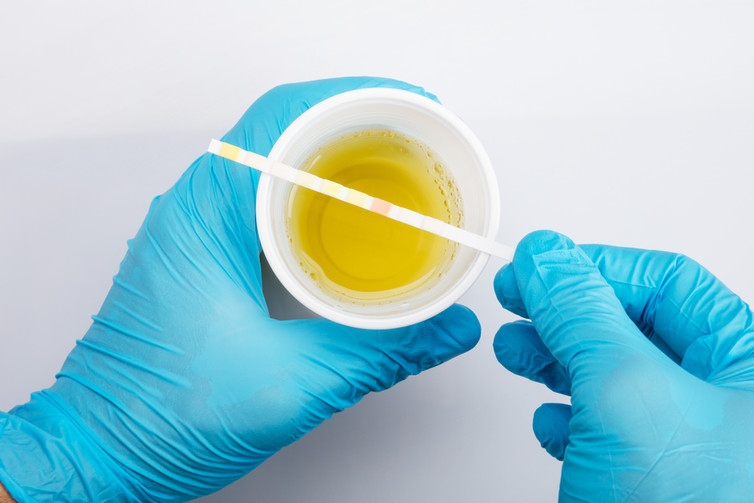
At the GP, the first test uses a dipstick or strip test (sometimes called a rapid urine test). This involves dipping a specially treated plastic or paper strip into a urine sample collected in a sterile plastic pot.
The doctor compares the colour of the test strip with a chart of standard colours. If the strip test detects (is positive for) white blood cells (leucocytes), blood and/or chemicals called nitrites, infection is likely.
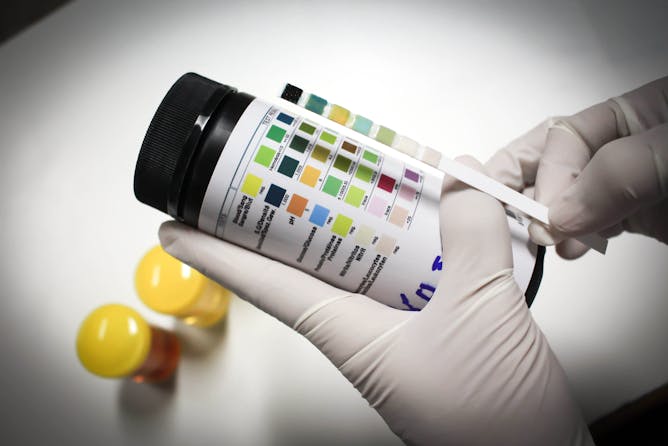
from shutterstock.com
Then, the doctor sends off a sample of the urine to the laboratory for further testing. There, a laboratory technician can view it under a microscope to look for bacteria and cells. If the white cell count is above a baseline level, or if organisms are identified (and the patient has symptoms), an infection is very likely.
Further testing in the laboratory involves culturing the bacteria from the urine (by growing it in a special medium) and testing different antibiotics on it to see which one is most effective.
How your urine sample is handled in hospital may be different. Larger hospitals have a laboratory on site and patients will usually wait in the emergency department for the results of the laboratory microscopic evaluation. Doctors then start treatment with this extra information.
Patients sent home from the emergency department will still need to visit their GP for the final laboratory results, such as the antibiotic sensitivities. If you are admitted to hospital, treatment will start and may be modified once these results are known.
Sterile samples are vital
For any of these tests to be valid, the urine sample needs to be sterile (without contamination). To obtain a sterile sample in hospital, that might involve inserting a catheter (a tube that collects urine from the bladder) or a needle into the bladder (suprapubic aspiration).
But the most common method is by asking for a mid-stream urine sample (also known as clean-catch urine sample). This is when you urinate the first part of the urine stream into the toilet, collect the middle part of the stream in a sterile container, then empty the rest of the bladder into the toilet.
The idea is that the first discarded urine flushes out any bacteria or skin cells from the penis or vagina leaving the mid-stream sample as a truly representative sample to test.
Instructions are often vague
But many patients will recall being asked to provide a urine sample without adequate explanation of how to do it. They are simply handed a sample container and given directions to the toilet.
Without instruction patients may not know how to prepare their external genitalia. For women this involves parting the labia or lips of the vagina, while for men, this involves retracting the foreskin.
Nor are patients clearly advised how to provide the sample. As a result, they can contaminate the container and its lid by not washing their hands, and their sample often contains the first rather than mid-stream urine.
In these cases, what actually gets into the sample are contaminants; cells and bacteria from hands; or cells and bacteria from the lower part of the urinary tract and genitalia.
Unfortunately for women, their anatomy is more likely to result in more of this latter contamination. They void urine from the urethra (the tube from the bladder) and through a part of the vagina, while men most often void directly into the container.
Why is a contaminant-free sample important?
If the sample is contaminated there are various consequences. The laboratory will report contamination and advise the doctor to take care in interpreting results. However, a contaminated sample can result in incorrect diagnosis and incorrect or unnecessary treatment.
A new sample will probably be needed. This causes delays in diagnosis and treatment, potential anxiety to the patient and additional costs.
In our hospital, where the emergency department collects more than 1,000 mid-stream samples each month, women’s samples are contaminated over 40% of the time. In a recent trial visual instructions in the form of cartoons were provided on how to collect the samples.
We paid particular attention to hand washing and collection technique. The number of contaminated samples was reduced by 15%. This potentially could save upwards of 150 repeat tests a month and those instructions are now provided to all patients in the emergency department.
If you are unsure how to take a sterile sample, ask your doctor or nurse for more information. It can save you the time, inconvenience and worry of coming back for another sample.
 This article has been updated to clarify a woman’s anatomy.
Rob Eley, Academic Research Manager, Princess Alexandra Hospital Southside Clinical Unit, The University of Queensland and Michael Sinnott, Adjunct Associate Professor, Faculty of Medicine, The University of Queensland
This article was originally published on The Conversation. Read the original article.
Welcome
Welcome to kigalihe.com, the source of health and medical information in Kigali.
Kigalihe.com is offering healthcare directory, health education and allow you to interact with doctors .
The kigalihe.com is an accurate and comprehensive directory of medical and health services in Kigali. The directory include:
Public hospitals
Private hospitals and clinics
Dental clinics
Eye Hospital and clinics
Pharmacies
Supplements providers
Health and fitness clubs.
Get listed or update your business listing. With a listing on kigalihe.com, your will reach a global audience as we are the leading guide for locating health and medical practitioners and services i Kigali. Simply email your updated information regarding address, services and your health insurances partners.
Kigalihe.com also offers a variety of resources, medical presentations,articles and health information to professionnals and community.
Kigalihe.com helps members to discover, find and connect with professionnals.
We want to hear from you, so let us know if you have any input, question or comment,or if you need help with a feature on our site. Feel free to use our feedback service to get in touch with us.
We strive to bring the consumer the professionnal accurate information to ensure a helping hand when you need it most.
We believe that providing a compelling search experience will empowe users to live their online time more richly and efficiently.
Kigalihe.com
The five most addictive substances on Earth – and what they do to your brain
The five most addictive substances on Earth – and what they do to your brain
Photo@igihe.com Eric Bowman, University of St Andrews
What are the most addictive drugs? This question seems simple, but the answer depends on whom you ask. From the points of view different researchers, the potential for a drug to be addictive can be judged in terms of the harm it causes, the street value of the drug, the extent to which the drug activates the brain’s dopamine system, how pleasurable people report the drug to be, the degree to which the drug causes withdrawal symptoms, and how easily a person trying the drug will become hooked.
There are other facets to measuring the addictive potential of a drug, too, and there are even researchers who argue that no drug is always addictive. Given the varied view of researchers, then, one way of ranking addictive drugs is to ask expert panels. In 2007, David Nutt and his colleagues asked addiction experts to do exactly that – with some interesting findings.
1. Heroin
Nutt et al.’s experts ranked heroin as the most addictive drug, giving it a score of 3 out of a maximum score of 3. Heroin is an opiate that causes the level of dopamine in the brain’s reward system to increase by up to 200% in experimental animals. In addition to being arguably the most addictive drug, heroin is dangerous, too, because the dose that can cause death is only five times greater than the dose required for a high.
Heroin also has been rated as the second most harmful drug in terms of damage to both users and to society. The market for illegal opiates, including heroin, was estimated to be $68 billion worldwide in 2009.
2. Cocaine
Cocaine directly interferes with the brain’s use of dopamine to convey messages from one neuron to another. In essence, cocaine prevents neurons from turning the dopamine signal off, resulting in an abnormal activation of the brain’s reward pathways. In experiments on animals, cocaine caused dopamine levels to rise more than three times the normal level. It is estimated that between 14-20m people worldwide use cocaine and that in 2009 the cocaine market was worth about $75 billion.
Crack cocaine has been ranked by experts as being the third most damaging drug and powdered cocaine, which causes a milder high, as the fifth most damaging. About 21% of people who try cocaine will become dependent on it at sometime in their life. Cocaine is similar to other addictive stimulants, such as methamphetamine – which is becoming more of a problem as it becomes more widely available – and amphetamine.
3. Nicotine
Nicotine is the main addictive ingredient of tobacco. When somebody smokes a cigarette, nicotine is rapidly absorbed by the lungs and delivered to the brain. Nutt et al’s expert panels rated nicotine (tobacco) as the third most addictive substance.

It puts a spell on you.
Anton Raath/flickr, CC BY-SA
More than two-thirds of Americans who tried smoking reported becoming dependent during their life. In 2002 the WHO estimated there were more than 1 billion smokers and it has been estimated that tobacco will kill more than 8m people annually by 2030. Laboratory animals have the good sense not to smoke. However, rats will press a button to receive nicotine directly into their bloodstream – and this causes dopamine levels in the brain’s reward system to rise by about 25-40%.
4. Barbiturates (‘downers’)
Barbiturates – also known as blue bullets, gorillas, nembies, barbs and pink ladies – are a class of drugs that were initially used to treat anxiety and to induce sleep. They interfere with chemical signalling in the brain, the effect of which is to shut down various brain regions. At low doses, barbiturates cause euphoria, but at higher doses they can be lethal because they suppress breathing. Barbiturate dependence was common when the drugs were easily available by prescription, but this has declined dramatically as other drugs have replaced them. This highlights the role that the context plays in addiction: if an addictive drug is not widely available, it can do little harm. Nutt et al’s expert panels rated barbiturates as the fourth most addictive substance.
5. Alcohol
Although legal in the US and UK, alcohol was scored by Nutt et al.’s experts 1.9 out of a maximum of 3. Alcohol has many effects on the brain, but in laboratory experiments on animals it increased dopamine levels in the brain’s reward system by 40-360% – and the more the animals drank the more dopamine levels increased.

Oh, go on! Just one more.
Gavin Schaefer/flickr, CC BY
Some 22% of people who have taken a drink will develop dependence on alcohol at some point during their life. The WHO has estimated that 2 billion people used alcohol in 2002 and more than 3m people died in 2012 due to damage to the body caused by drinking. Alcohol has been ranked as the most damaging drug by other experts, too.
This article has been amended to reflect an error in the reading of Nutt et al.’s data. The author wishes to thank Erin Brodwin/Business Insider for detecting the error.

Eric Bowman, Lecturer in Psychology and Neuroscience , University of St Andrews
This article was originally published on The Conversation. Read the original article.
Ten myths about smoking that will not die
Ten myths about smoking that will not die
Simon Chapman, University of Sydney
Across forty years I’ve come to recognise many factoid-driven myths about smoking that just won’t die. If I asked for a dollar each time I had to refute these statements, I’d have accumulated a small fortune.
Their persistence owes much to their being a vehicle for those who utter them to express unvoiced but clear sub-texts that reflect deeply held beliefs about women, the disadvantaged, mental illness, government health campaigns and the “natural”.
Let’s drive a stake through the heart of ten of the most common myths.
1. Women and girls smoke more than men and boys
Women have never smoked more than men. Occasionally, a survey will show one age band where it’s the other way around, but from the earliest mass uptake of smoking in the first decades of last century, men streaked out way ahead of women.
In 1945 in Australia, 72% of men and 26% of women smoked. By 1976, men had fallen to 43% and women had risen to 33%.
As a result, men’s tobacco-caused death rates have always been much higher than those of women. Women’s lung cancer rates, for example, seem unlikely to reach even half the peak rates that we saw among men in the 1970s.
Currently in Australia, 15% of men and 12% of women smoke daily.
But what about all the “young girls” you can see smoking, I’m always being told. In 2014, 13% of 17-year-old male high school students and 11% of females smoked. In two younger age bands, girls smoked more (by a single percentage point).
Those who keep on insisting girls smoke more are probably just letting their sexist outrage show about noticing girls’ smoking than their ignorance about the data.
2. Quit campaigns don’t work on low socioeconomic smokers
In Australia, 11% of those in the highest quintile of economic advantage smoke, compared with 27.6% in the lowest quintile. More than double.
So does this mean that our quit campaigns “don’t work” on the least well-off?
Smoking prevalence data reflect two things: the proportion of people who ever smoked, and the proportion who quit.
If we look at the most disadvantaged group, we find that a far higher proportion take up smoking than in their more well-to-do counterparts. Only 39.5% have never smoked compared with 50.4% of the most advantaged – see table 9.2.6).
When it comes to quitting, 46% of the most disadvantaged have quit compared to 66% of the least disadvantaged (see table 9.2.9).
There is a higher percentage of the disadvantaged who smoke mainly because more take it up, not because disadvantaged smokers can’t or won’t quit. With 27.6% of the most disadvantaged smoking today, the good news is that nearly three-quarters don’t. Smoking and disadvantage are hardly inseparable.
3. Scare campaigns ‘don’t work’
Countless studies have asked ex-smokers why they stopped and current smokers about why they are trying to stop. I have never seen such a study when there was not daylight between the first reason cited (worry about health consequences) and the second most nominated reason (usually cost).
For example, this national US study covering 13 years showed “concern for your own current or future health” was nominated by 91.6% of ex-smokers as the main reason they quit, compared with 58.7% naming expense and 55.7% being concerned about the impact of their smoking on others.
If information and warnings about the dire consequences of smoking “don’t work”, then from where do all these ex-smokers ever get these top-of-mind concerns? They don’t pop into their heads by magic. They encounter them via anti-smoking campaigns, pack warnings, news stories about research and personal experiences with dying family and friends. The scare campaigns work.
4. Roll-your-own tobacco is more ‘natural’ than factory made
People who smoke rollies often look you in the eye and tell you that factory made cigarettes are full of chemical additives, while roll-your-own tobacco is “natural” – it’s just tobacco. The reasoning here that we are supposed to understand is that it’s these chemicals that are the problem, while the tobacco, being “natural”, is somehow OK.
This myth was first turned very unceremoniously on its head when New Zealand authorities ordered the tobacco companies to provide them with data on the total weight of additives in factory made cigarettes, roll-your-own and pipe tobacco.
For example, data from 1991 supplied by WD & HO Wills showed that in 879,219kg of cigarettes, there was 1,803kg of additives (0.2%). While in 366,036kg of roll-your-own tobacco, there was 82,456kg of additives (22.5%)!
Roll-your-own tobacco is pickled in flavouring and humectant chemicals, the latter being used to keep the tobacco from drying out when smokers expose the tobacco to the air 20 or more times a day when they remove tobacco to roll up a cigarette.
5. Nearly all people with schizophrenia smoke
It’s true that people with mental health problems are much more likely to smoke than those without diagnosed mental health conditions. A meta-analysis of 42 studies on tobacco smoking by those with schizophrenia found an average 62% smoking prevalence (range 14%-88%). But guess which study in these 42 gets cited and quoted far more than any of the others?
If you said the one reporting 88% smoking prevalence you’d be correct. This small 1986 US study of just 277 outpatients with schizophrenia has today been cited a remarkable 1,135 times. With colleagues, I investigated this flagrant example of citation bias (where startling but atypical results stand out in literature searches and get high citations – “wow! This one’s got a high number, let’s quote that one!”).
By googling “How many schizophrenics smoke”, we showed how this percolates into the community via media reports where figures are rounded up in statements such as, “As many as 90% of schizophrenic patients smoke.”
Endlessly repeating that “90%” of those with schizophrenia smoke does these people a real disservice. We would not tolerate such inaccuracy about any other group.
6. Everyone knows the risks of smoking
Knowledge about the risks of smoking can exist at four levels:
- Level 1: having heard that smoking increases health risks.
- Level 2: being aware that specific diseases are caused by smoking.
- Level 3: accurately appreciating the meaning, severity, and probabilities of developing tobacco related diseases.
Level 4: personally accepting that the risks inherent in levels 1–3 apply to one’s own risk of contracting such diseases.
Level 1 knowledge is very high, but as you move up the levels, knowledge and understanding greatly diminish. Very few people, for example, are likely to know that two in three long term smokers will die of a smoking caused disease, nor the average number of years that smokers lose off normal life expectancy.
7. You can reduce the health risks of smoking by just cutting down
It’s true that if you smoke five cigarettes a day rather than 20, your lifetime risk of early death is less (although check the risks for one to four cigarettes a day here).
But trying to “reverse engineer” the risk by just cutting down rather than quitting has been shown in at least four large cohort studies such as this one to confer no harm reduction.
If you want to reduce risk, quitting altogether should be your goal.
8. Air pollution is the real cause of lung cancer
Air pollution is unequivocally a major health risk. By “pollution”, those who make this argument don’t mean natural particulate matter such as pollen and soil dusts, they mean nasty industrial and vehicle pollution.
The most polluted areas of Australia are cities where pollution from industry and motor vehicle emissions are most concentrated. Remote regions of the country are the least polluted, so if we wanted to consider the relative contributions of air pollution and smoking to smoking-caused diseases, an obvious question to ask would be “does the incidence of lung cancer differ between heavily polluted cities and very unpolluted remote areas?”
Yes it does. Lung cancer incidence is highest in Australia in (wait for this …) in the least polluted very remote regions of the country, where smoking prevalence happens also to be highest.
9. Smokers should not try to quit without professional help or drugs
If you ask 100 ex-smokers how they quit, between two-thirds and three-quarters will tell you they quit unaided: on their final successful quit attempt, they did not use nicotine replacement therapy, prescribed drugs, or go to some dedicated smoking cessation clinic or experience the laying on of hands from some alternative medicine therapist. They quit unaided.
So if you ask the question: “What method is used by most successful quitters when they quit?” The answer is cold turkey.
Fine print on this English National Health Service poster states a bald-faced lie by saying that “There are some people who can go cold turkey and stop. But there aren’t many of them.” In the years before nicotine-replacement threapy and other drugs were available, many millions – including heavy smokers – quit smoking without any assistance. That’s a message that the pharmaceutical industry was rather not megaphoned.

Not true.
NHS poster.
10. Many smokers live into very old age: so it can’t be that harmful
In just the way that five out of six participants in a round of deadly Russian roulette might proclaim that putting a loaded gun to their head and pulling the trigger caused no harm, those who use this argument are just ignorant of risks and probability.
Many probably buy lottery tickets with the same deep knowing that they have a good chance of winning.

Simon Chapman, Emeritus Professor in Public Health, University of Sydney
This article was originally published on The Conversation. Read the original article.
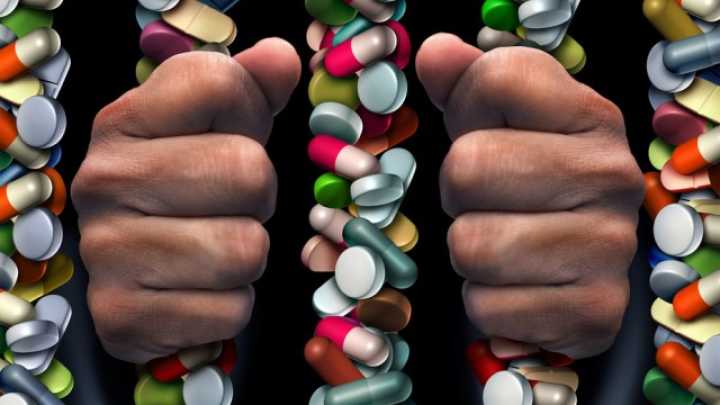
There’s no such thing as an ‘addictive personality’ – here’s why
There’s no such thing as an ‘addictive personality’ – here’s why
Mark Griffiths, Nottingham Trent University
“Life is a series of addictions and without them we die”.
This is my favourite quote in academic addiction literature and was made back in 1990 in the British Journal of Addiction by Isaac Marks. This deliberately provocative and controversial statement was made to stimulate debate about whether excessive and potentially problematic activities such as gambling, sex and work really can be classed as genuine addictions.
Many of us might say to ourselves that we are “addicted” to tea, coffee, work or chocolate, or know others who we might describe as being “hooked” on television or using pornography. But do these assumptions have any basis in fact?
The issue all comes down to how addiction is defined in the first place – as many of us in the field disagree on what the core components of addiction actually are. Many would argue that the words “addiction” and “addictive” are used so much in everyday circumstances that they have become meaningless. For instance, saying that a book is an “addictive read” or that a specific television series is “addictive viewing” renders the word useless in a clinical setting. Here, the word “addictive” is arguably used in a positive way and as such it devalues its real meaning.
Healthy enthusiasm … or real problem?
The question I get asked most – particularly by the broadcast media – is what is the difference between a healthy excessive enthusiasm and an addiction? My response is simple: a healthy excessive enthusiasm adds to life, whereas an addiction takes away from it. I also believe that to be classed as an addiction, any such behaviour should comprise a number of key components, including overriding preoccupation with the behaviour, conflict with other activities and relationships, withdrawal symptoms when unable to engage in the activity, an increase in the behaviour over time (tolerance), and use of the behaviour to alter mood state.
Other consequences, such as feeling out of control with the behaviour and cravings for the behaviour are often present. If all these signs and symptoms are present then I would call the behaviour a true addiction. But that hasn’t stopped others accusing me of watering down the concept of addiction.
The science of addiction
A few years ago, Steve Sussman, Nadra Lisha and I published a review examining the relationship between eleven potentially addictive behaviours reported in the academic literature: smoking tobacco, drinking alcohol, taking illicit drugs, eating, gambling, internet use, love, sex, exercise, work and shopping. We examined the data from 83 large-scale studies and reported a prevalence of an addiction among US adults ranged from as low as 15% to as high as 61% in a 12-month period.
We also reported it plausible that 47% of the US adult population suffers from maladaptive signs of an addictive disorder over a 12-month period and that it may be useful to think of addictions as due to problems of lifestyle as well as to person-level factors. In short – and with many caveats – our paper argued that at any one time almost half the US population is addicted to one or more behaviours.

A problem in many forms.
Shutterstock
There is a lot of scientific literature showing that having one addiction increases the propensity to have other addictions. For instance, in my own research, I have come across alcoholic pathological gamblers – and we can all probably think of people we might describe as caffeine-addicted workaholics. It is also common for people who give up one addiction to replace it with another (which we psychologists call “reciprocity”). This is easily understandable as when a person gives up one addiction it leaves a void in the person’s life and often the only activities that can fill the void and give similar experiences are other potentially addictive behaviours. This has led many people to describe such people as having an “addictive personality”.
Addictive personalities?
While there are many pre-disposing factors for addictive behaviour, including genes and personality traits, such as high neuroticism (anxious, unhappy, prone to negative emotions) and low conscientiousness (impulsive, careless, disorganised), addictive personality is a myth.
Even though there is good scientific evidence that most people with addictions are highly neurotic, neuroticism in itself is not predictive of addiction. For instance, there are highly neurotic people who are not addicted to anything, so neuroticism is not predictive of addiction. In short, there is no good evidence that there is a specific personality trait – or set of traits – that is predictive of addiction and addiction alone.
Doing something habitually or excessively does not necessarily make it problematic. While there are many behaviours such as drinking too much caffeine or watching too much television that could theoretically be described as addictive behaviours, they are more likely to be habitual behaviours that are important in a person’s life but actually cause little or no problems. As such, these behaviours should not be described as an addiction unless the behaviour causes significant psychological or physiological effects in their day-to-day lives.

Mark Griffiths, Director of the International Gaming Research Unit and Professor of Behavioural Addiction, Nottingham Trent University
This article was originally published on The Conversation. Read the original article.

Why are we becoming so narcissistic? Here’s the science
Why are we becoming so narcissistic? Here’s the science
Olivia Remes, University of Cambridge
The subject of narcissism has intrigued people for centuries, but social scientists now claim that it has become a modern “epidemic”. So what is it, what has led to its increase, and is there anything we can do about it?
In the beginning
The term narcissism originated more than 2,000 years ago, when Ovid wrote the legend of Narcissus. He tells the story of a beautiful Greek hunter who, one day, happens to see his reflection in a pool of water and falls in love with it. He becomes obsessed with its beauty, and is unable to leave his reflected image until he dies. After his death, the flower narcissus grew where he lay.

Narcissus: the ego flower.
Shutterstock
The concept of narcissism was popularised by the psychoanalyst Sigmund Freud through his work on the ego and its relationship to the outside world; this work became the starting point for many others developing theories on narcissism.
So when does it become a problem?
Narcissism lies on a continuum from healthy to pathological. Healthy narcissism is part of normal human functioning. It can represent healthy self-love and confidence that is based on real achievement, the ability to overcome setbacks and derive the support needed from social ties.
But narcissism becomes a problem when the individual becomes preoccupied with the self, needing excessive admiration and approval from others, while showing disregard for other people’s sensitivities. If the narcissist does not receive the attention desired, substance abuse and major depressive disorder can develop.
Narcissists often portray an image of grandiosity or overconfidence to the world, but this is only to cover up deep feelings of insecurity and a fragile self-esteem that is easily bruised by the slightest criticism. Because of these traits, narcissists find themselves in shallow relationships that only serve to satisfy their constant need for attention. When narcissistic traits become so pronounced that they lead to impairment this can indicate the presence of narcissistic personality disorder.
The Diagnostic and Statistical Manual of Mental Disorders describes narcissistic personality disorder as “a pervasive pattern of grandiosity, need for admiration, and lack of empathy that begins by early adulthood and is present in a variety of contexts”. People with narcissistic personality disorder show a grandiose sense of self-importance, are consumed by fantasies of unlimited success, power, brilliance, beauty or ideal love, and are extremely sensitive to criticism, among other things.
Younger people and men seem to be most affected. The exact causes of narcissistic personality disorder are unknown, but childhood abuse and neglect may be possible factors involved in its formation.
What has led to its increase?
In the clinical setting, about 2% to 16% of people suffer from this disorder, while in the general population, less than 1% of people are affected. Some suggest that narcissistic personality disorder is quite rare, but study estimates vary widely depending on sample sizes and the ways that narcissistic traits are assessed.

Yeah, so?
Shutterstock
Others have labelled narcissism a “modern epidemic”, pointing to the rapid change in society that occurred in industrial and post-industrial times as the cause. The past few decades have witnessed a societal shift from a commitment to the collective to a focus on the individual or the self. The self-esteem movement was an important turning point in this. It determined that self-esteem was the key to success in life. Educators and parents started telling their children how special and unique they are to make them feel more confident. Parents tried to “confer” self-esteem upon their children, rather than letting them achieve it through hard work.
The rise of individualism (with its focus on the self and inner feelings) and decline in social norms that accompanied the modernisation of society also meant that the community and the family were no longer able to provide the same support for individuals as they once did. And research has shown that being embedded in social networks – for example, being actively engaged in your community and connected with friends and family – has major health benefits.
As the social fabric deteriorated, it became much harder to meet the basic need for meaningful connection. The question moved from what is best for other people and the family to what is best for me. The modernisation of society seemed to prize fame, wealth, celebrity above all else. All this, combined with the breakdown in social ties created an “empty self, shorn of social meaning”.

Social media: all about me?
Shutterstock
The rise in technology and the development of hugely popular social networking sites, such as Facebook, further changed the way we spend our free time and communicate. Today, there are nearly 936m active Facebook users each day worldwide. Internet addiction is a new area of study in mental health and recent cross-sectional research shows that addiction to Facebook is strongly linked to narcissistic behaviour and low self-esteem.
So what can we do about it?
Treatment for narcissistic personality disorder exists and this includes pharmacotherapy and psychotherapy. Meditation has also been shown to have positive effects on mental health. Further research, however, is needed on the effectiveness of various treatments.
So what can we do about all this and how can we lead a happy and purposeful life? One of the largest studies on happiness was conducted by a group of Harvard researchers who followed a large cohort of people over a period of 75 years. What they discovered – unsurprisingly – was that fame and money were not the secrets to happiness. Rather, the most important thing in life and the greatest predictor of satisfaction was having strong and supportive relationships – essentially, that “the journey from immaturity to maturity is a sort of movement from narcissism to connection”.
So maybe it’s time to take a break from that smartphone, shut off your computer and meet up with a friend or two. Maybe, just maybe, you might feel a little better – and boost your self-esteem.

Olivia Remes, PhD Candidate, University of Cambridge
This article was originally published on The Conversation. Read the original article.