Extinguished and anguished: what is burnout and what can we do about it?

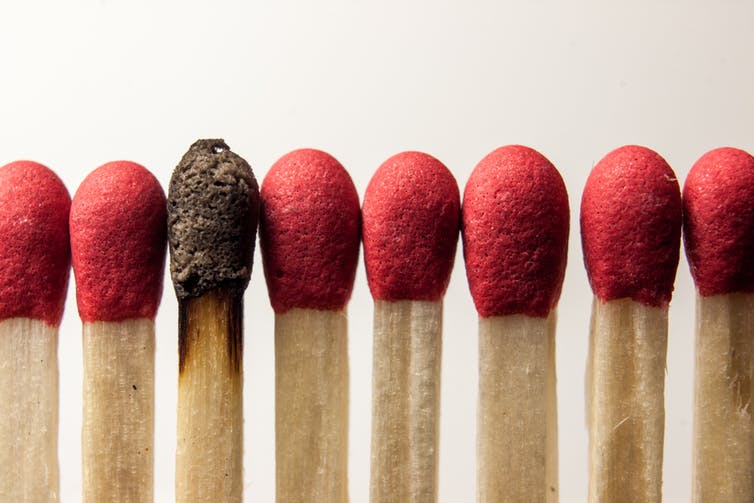
Burnout doesn’t only affect workers.
from www.shutterstock.com

Gabriela Tavella, UNSW and Gordon Parker, UNSW

Feeling “burnt out” is a pretty common phrase in daily parlance, but we’re starting to learn more about its longer-term destructive effects. Sufferers often describe feeling exhausted and disconnected, and as though they’re “going through the motions” without motivation or meaning.

Burnout can have serious consequences, including reduced work performance and life satisfaction, and has been associated with other mental health conditions. For instance, it has been linked to depression, as both conditions share a number of symptoms such as fatigue, social withdrawal and decreased work performance.


Read more:
Health Check: Stressed at work? How to beat common traps in the rat race


Burnout is usually seen as a consequence of a chronic stressful work environment, emerging as a workplace concern in the 1970s when American researchers found many human services workers were not coping with their jobs and felt “burnt out”.

The workers reported:

• emotional exhaustion: becoming emotionally drained and fatigued

• depersonalisation: a loss of empathy towards clients

• reduced personal accomplishment: feeling incompetent and inept at work.

Since then, burnout research has expanded across other occupations and its definition modified to include cynicism towards work.

However most research still focuses on work-related burnout. But people from all walks of life may experience burnout, and not just from work. For example, burnout may also be experienced by students who are overwhelmed by their study commitments, or a mother (or carer) caring for a severely disabled child.

The risk of burnout for those in caring roles is not a new phenomenon. Records from Christian monks of the 4th Century outline what they call “acedia” (a Greek word which translates as “non-caring”), a state probably akin to burnout. After decades of caring for others, the monks were said to have doubted whether they were doing anything useful and judged each day as “grey”.

Burnout appears to occur across a range of contexts, but we do not know enough about its causes and how to diagnose and manage it successfully.


Read more:
Overworked? Good habits, not holidays, are the answer


Causes

We know job-related burnout can be triggered by exposure to multiple and continuing work stressors. While such stressors may differ across occupations, they relate to the demanding and unrelenting nature of a job, combined with a toxic mix of lack of resources and support.

Burnout can also be triggered by certain personality traits. For instance, research has linked burnout to a person’s evaluation of themselves and their abilities, a trait known as core self-evaluation.

Full-time carers can experience burnout.
from www.shutetrstock.com

Low core self-evaluation is when someone has negative views about their own skills and ability to control situations. People with low core self-evaluation are susceptible to burnout as they likely view difficult work assignments as threatening or overwhelming, rather than achievable challenges.

Perfectionists are also at greater risk of burnout, as they tend to set excessively high performance standards they inevitably fail to meet, thus diminishing their sense of personal accomplishment.

Measurement and diagnosis

The main tool used in research studies to measure burnout is called the Maslach Burnout Inventory (MBI), a survey that requires individuals to answer several questions relating to emotional exhaustion, depersonalisation/cynicism and reduced personal accomplishment.

But it has been widely criticised due to concerns it doesn’t accurately capture the concept of burnout, is not culturally sensitive for use outside of the United States, and was designed to measure burnout in individuals still in the workforce – not those who have stopped working as a consequence of clinical burnout.

In addition to the issues surrounding measuring burnout in a research context, it is also difficult to diagnose in clinical settings. This is because the condition is not recognised in the Diagnostic and Statistical Manual, used internationally to diagnose mental health disorders. So there is no set of indicative criteria for mental health professionals to use to diagnose people suffering from clinically significant burnout.


Read more:
Clock off, switch off: tips to stress less outside work hours


This in turn influences treatment, as without a concrete diagnosis it’s difficult for mental health professionals and their patients to make decisions about appropriate treatment.

Management

Management strategies remain quite unclear, however should be targeted to individual sufferers. This means addressing the unique stressors that contribute to burnout in each person.

Management strategies should also acknowledge the individual’s personality style. Strategies that work to remove external stressors (such taking a month off work and lying on a beach) might assist some sufferers, but might further stress others whose personalities don’t allow them to “switch off” outside the office.

Personality styles are generally thought to be unchangeable across a person’s lifespan. So for those who have personality traits that put them at extra risk of burnout, it has been suggested they be taught techniques that help them cope more effectively with external stressors, rather than trying to change their personality.

The ConversationSuccessful interventions to prevent and treat burnout depend on a more complete understanding of the condition. Our team at the Black Dog Institute is currently conducting a study that should assist in defining and measuring burnout and its principal causes. You can participate in our study here.

Gabriela Tavella, Research Assistant, UNSW School of Psychiatry, UNSW and Gordon Parker, Scientia Professor, UNSW

This article was originally published on The Conversation. Read the original article.

Gut microbes may affect heart disease risk – first study in humans

metamorworks/Shutterstock.com

Ana Valdes, University of Nottingham

Research has shown that having the right gut microbes can reduce the risk of heart disease – if you’re a mouse. Now, our latest study, published in the European Heart Journal, shows that this might be true for humans, too.

Most people know that the risk factors for heart disease are high blood pressure, high cholesterol and smoking. But these factors are not very good at predicting heart disease in younger people, in women and in some ethnic groups. A poor gut microbiome could be the missing risk factor we’ve been looking for.

One of the ways that the risk of heart attack or stroke is assessed is by measuring the hardening of the arteries. This measure, called arterial stiffness, is not strongly associated with high cholesterol or smoking, but it is closely related to inflammation.

Inflammation is our body’s normal response to injury, but when it is too high, in a way that is not a response to injury, it can cause many diseases, such as arthritis and eczema. Studies have shown that the more inflammation a person has, the higher their risk of heart disease and of having artherosclerotic arteries.

Recently, several large clinical studies have shown that inflammation is a key factor in the development of heart disease and stiffening of the arteries. In one study, giving people a drug that reduces inflammation brought down the number of heart attacks in people who had already had one heart attack. It also brought down their risk of cancer.

But how can we reduce inflammation without fancy drugs? Avoiding obesity and smoking are a good start, but the good bacteria that live in our gut can also help.

You can give your gut bacteria a helping hand by eating a high-fibre diet.
Brian A Jackson/Shutterstock.com

We can improve our gut bacteria

The microbes that live in our gut seem to be important in preventing a number of diseases caused by inflammation such as psoriatic arthritis, diabetes and gut conditions like inflammatory bowel disease. In all of these diseases, it has been found that there is a lack of diversity of healthy gut bacteria, which means there are fewer kinds of microbes.

In our study, we found that women with more hardening of the arteries have lower microbial diversity in their gut, and that the women with healthier arteries have more diversity. Not only that, certain beneficial substances produced by microbes were also seen at higher levels in the blood of people with healthier arteries. This substance, indoleproprionic acid, has previously been shown to predict a lower risk of developing diabetes. Bacteria in the gut produce more indoleproprionic acid when a person eats a diet high in fibre.

Overall, we found that almost 10% of the amount arterial hardening was explained by the gut microbes and substances produced by the microbes. In comparison, cholesterol levels, smoking, diabetes and middle obesity explained less than 2% of this measure of risk of heart disease.

This is very exciting because, unlike genetic risks, which we can’t do much about, the microbes in the gut and the substances they produce can be changed. One way to influence the gut microbes is to eat good bacteria. This can be done by eating probiotic foods or supplements, or by having a faecal transplant.


Read more:
Why poo transplants are nothing to be sniffed at


This method has worked for diabetes in a pilot study. Scientists gave gut microbes from healthy people to people with diabetes. After a few weeks, the diabetes improved and the microbes in the gut were changed. These type of studies could also be done for heart disease and other conditions.

The ConversationAnother way is to change what we eat. The good bacteria in our gut grow better when we eat a diet rich omega-3 (found in fish oil) or in dietary fibre, which is found in fruit and veg and is also particularly high in foods such as wholemeal bread, nuts, oats, beans and dark chocolate. The links between gut microbes and our health are good news because we can do something to increase their diversity.

Ana Valdes, Associate Professor and Reader, University of Nottingham

This article was originally published on The Conversation. Read the original article.

What do we know about marijuana’s medical benefits? Two experts explain the evidence

Steven Kinsey, West Virginia University et Divya Ramesh, University of Connecticut

Currently 25 states and the District of Columbia have medical cannabis programs. On Nov. 8, Arkansas, Florida and North Dakota will vote on medical cannabis ballot initiatives, while Montana will vote on repealing limitations in its existing law.

We have no political position on cannabis legalization. We study the cannabis plant, also known as marijuana, and its related chemical compounds. Despite claims that cannabis or its extracts relieve all sorts of maladies, the research has been sparse and the results mixed. At the moment, we just don’t know enough about cannabis or its elements to judge how effective it is as a medicine.

What does the available research suggest about medical cannabis, and why do we know so little about it?

The jury is still out on marijuana’s medical benefits.
Thomas Hawk/Flickr, CC BY-NC

What are researchers studying?

While some researchers are investigating smoked or vaporized cannabis most are looking at specific cannabis compounds, called cannabinoids.

From a research standpoint, cannabis is considered a “dirty” drug because it contains hundreds of compounds with poorly understood effects. That’s why researchers tend to focus on just one cannabinoid at a time. Only two plant-based cannabinoids, THC and cannabidiol, have been studied extensively, but there could be others with medical benefits that we don’t know about yet.

THC is the main active component of cannabis. It activates cannabinoid receptors in the brain, causing the “high” associated with cannabis, as well as in the liver, and other parts of the body. The only FDA-approved cannabinoids that doctors can legally prescribe are both lab produced drugs similar to THC. They are prescribed to increase appetite and prevent wasting caused by cancer or AIDS.

Cannabidiol (also called CBD), on the other hand, doesn’t interact with cannabinoid receptors. It doesn’t cause a high. Seventeen states have passed laws allowing access to CBD for people with certain medical conditions.

Our bodies also produce cannabinoids, called endocannabinoids. Researchers are creating new drugs that alter their function, to better understand how cannabinoid receptors work. The goal of these studies is to discover treatments that can use the body’s own cannabinoids to treat conditions such as chronic pain and epilepsy, instead of using cannabis itself.

Cannabis is promoted as a treatment for many medical conditions. We’ll take a look at two, chronic pain and epilepsy, to illustrate what we actually know about its medical benefits.

Is it a chronic pain treatment?

Research suggests that some people with chronic pain self-medicate with cannabis. However, there is limited human research on whether cannabis or cannabinoids effectively reduce chronic pain.

Research in people suggest that certain conditions, such as chronic pain caused by nerve injury, may respond to smoked or vaporized cannabis, as well as an FDA-approved THC drug. But, most of these studies rely on subjective self-reported pain ratings, a significant limitation. Only a few controlled clinical trials have been run, so we can’t yet conclude whether cannabis is an effective pain treatment.

An alternative research approach focuses on drug combination therapies, where an experimental cannabinoid drug is combined with an existing drug. For instance, a recent study in mice combined a low dose of a THC-like drug with an aspirin-like drug. The combination blocked nerve-related pain better than either drug alone.

In theory, the advantage to combination drug therapies is that less of each drug is needed, and side effects are reduced. In addition, some people may respond better to one drug ingredient than the other, so the drug combination may work for more people. Similar studies have not yet been run in people.

Well-designed epilepsy studies are badly needed

Despite some sensational news stories and widespread speculation on the internet, the use of cannabis to reduce epileptic seizures is supported more by research in rodents than in people.

In people the evidence is much less clear. There are many anecdotes and surveys about the positive effects of cannabis flowers or extracts for treating epilepsy. But these aren’t the same thing as well-controlled clinical trials, which can tell us which types of seizure, if any, respond positively to cannabinoids and give us stronger predictions about how most people respond.

While CBD has gained interest as a potential treatment for seizures in people, the physiological link between the two is unknown. As with chronic pain, the few clinical studies have been done included very few patients. Studies of larger groups of people can tell us whether only some patients respond positively to CBD.

We also need to know more about the cannabinoid receptors in the brain and body, what systems they regulate, and how they could be influenced by CBD. For instance, CBD may interact with anti-epileptic drugs in ways we are still learning about. It may also have different effects in a developing brain than in an adult brain. Caution is particularly urged when seeking to medicate children with CBD or cannabis products.

Cannabis research is hard

Well-designed studies are the most effective way for us to understand what medical benefits cannabis may have. But research on cannabis or cannabinoids is particularly difficult.

Cannabis and its related compounds, THC and CBD, are on Schedule I of the Controlled Substances Act, which is for drugs with “no currently accepted medical use and a high potential for abuse” and includes Ecstasy and heroin.

In order to study cannabis, a researcher must first request permission at the state and federal level. This is followed by a lengthy federal review process involving inspections to ensure high security and detailed record-keeping.

In our labs, even the very small amounts of cannabinoids we need to conduct research in mice are highly scrutinized. This regulatory burden discourages many researchers.

Designing studies can also be a challenge. Many are based on users’ memories of their symptoms and how much cannabis they use. Bias is a limitation of any study that includes self-reports. Furthermore, laboratory-based studies usually include only moderate to heavy users, who are likely to have formed some tolerance to marijuana’s effects and may not reflect the general population. These studies are also limited by using whole cannabis, which contains many cannabinoids, most of which are poorly understood.

Placebo trials can be a challenge because the euphoria associated with cannabis makes it easy to identify, especially at high THC doses. People know when they are high.

Another type of bias, called expectancy bias, is a particular issue with cannabis research. This is the idea that we tend to experience what we expect, based on our previous knowledge. For example, people report feeling more alert after drinking what they are told is regular coffee, even if it is actually decaffeinated. Similarly, research participants may report pain relief after ingesting cannabis, because they believe that cannabis relieves pain.

The best way to overcome expectancy effects is with a balanced placebo design, in which participants are told that they are taking a placebo or varying cannabis dose, regardless of what they actually receive.

Studies should also include objective, biological measures, such as blood levels of THC or CBD, or physiological and sensory measures routinely used in other areas of biomedical research. At the moment, few do this, prioritizing self-reported measures instead.

Cannabis isn’t without risks

Abuse potential is a concern with any drug that affects the brain, and cannabinoids are no exception. Cannabis is somewhat similar to tobacco, in that some people have great difficulty quitting. And like tobacco, cannabis is a natural product that has been selectively bred to have strong effects on the brain and is not without risk.

Although many cannabis users are able to stop using the drug without problem, 2-6 percent of users have difficulty quitting. Repeated use, despite the desire to decrease or stop using, is known as cannabis use disorder.

As more states more states pass medical cannabis or recreational cannabis laws, the number of people with some degree of cannabis use disorder is also likely to increase.

The ConversationIt is too soon to say for certain that the potential benefits of cannabis outweigh the risks. But with restrictions to cannabis (and cannabidiol) loosening at the state level, research is badly needed to get the facts in order.

Steven Kinsey, Assistant Professor of Psychology, West Virginia University et Divya Ramesh, Research Associate, University of Connecticut

La version originale de cet article a été publiée sur The Conversation.

How a better understanding of the seven ages of appetite could help us stay healthy

What we eat, how much and how often changes over our lives.
milsamil/Shutterstock

Alex Johnstone, University of Aberdeen

Do you eat to live or live to eat? We have a complicated relationship with food, influenced by cost, availability, even peer pressure. But something we all share is appetite – our desire to eat. Increased appetite might have a physical or psychological dimension, but while hunger – our body’s way of making us desire food when it needs feeding – is a part of appetite, it is not the only factor. After all, we often eat when we’re not hungry, or may skip a meal despite pangs of hunger. Recent research has highlighted that the abundance of food cues – smells, sounds, advertising – in our environment is one of the main causes of overconsumption.

Our appetite is not fixed, it changes across our lifespan as we age. But as our choice of food will be an important factor to our health and well-being throughout our lives, it’s important that we get into the right habits. As Shakespeare might have put it, there are seven ages of appetite, and a better understanding of these phases would help us to develop new ways of tackling under-eating and overconsumption, and particularly the health effects such as obesity that follow.

First decade, 0-10

In early childhood the body goes through rapid growth. Dietary behaviour built up in early life can extend to adulthood, leading a fat child to become a fat adult. Fussiness or fear of food can contribute to meal time struggles for parents of young children, but a strategy of repeated tasting and learning in a positive environment can help children learn about unfamiliar but important foods, such as vegetables.

Children should experience some control, particularly in relation to portion size. Being forced to “clear the plate” by parents can lead youngsters to lose their ability to follow their own appetite and hunger cues, promoting overeating in later years. There are growing calls for governments to protect young children from targeted junk food advertising – not just on television but in apps, social media and video blogs – since food advertising increases food consumption, contributing to becoming overweight.

It’s important to ensure children develop good eating habits early on.
Sharomka/Shutterstock

Second decade, 10-20

In the teenage years, a growth in appetite and stature driven by hormones signals the arrival of puberty and the development from child into adult. How a teenager approaches food during this critical period will shape their lifestyle choices in later years. This means the dietary decisions adolescents make are intrinsically linked to the health of the future generations that they will be parents to. Unfortunately, without guidance teenagers may adopt eating behaviours and food preferences associated with unhealthy consequences.

We need more studies to determine the most effective ways of tackling the rising burden of over and under-nutrition, particularly the link with poverty and social inequality. Young women in general are more likely to suffer from nutritional deficiencies than young men because of their reproductive biology. Teenage girls who become pregnant are also at greater risk since their body is supporting their own growth in competition with that of the growing foetus.


Read more:
Explainer: why is it so hard to lose weight?


Third decade, 20-30

As young adults, lifestyle changes that can prompt weight gain include going to college, getting married or living with a partner, and parenthood. Once accumulated, body fat is often difficult to lose: the body sends strong appetite signals to eat when we consume less than our energy needs, but the signals to prevent overeating are weaker, which can lead to a circle of over-consumption. There are many physiological and psychological factors that make eating less difficult to maintain over time.

An area of new research interest is to develop satiety, the sense of having eaten enough. This is helpful when trying to lose weight, since feeling hungry is one of the main limitations to managing to eat less than your body is telling you you need – running a “calorie deficit”. Different foods send different signals to the brain. It’s easy to eat a tub of ice cream, for example, because fat doesn’t trigger signals in the brain for us to stop eating. On the other hand, foods high in protein, water or fibre content are able to make us feel fuller for longer. Working with the food industry provides an opportunity to shape the future of meals and snacks in beneficial ways.

Fourth decade, 30-40

Middle age spread.
Umit Urdem/Shutterstock

Adult working life brings other challenges: not just a rumbling stomach, but also the effects of stress, which has been shown to prompt changes in appetite and eating habits in 80% of the population, equally divided between those that gorge and those that lose their appetite. The different coping strategies are intriguing: the phenomena of “food addiction” – an irresistible urge to consume specific, often high-calorie foods – is not well understood. Many researchers even question its existence. Other personality traits such as perfectionism and conscientiousness may also play a role in mediating stress and eating behaviour.

Structuring the work environment to reduce problematic eating patterns such as snacking or vending machines is a challenge. Employers should strive to subsidise and promote healthier eating for a productive and healthy workforce – particularly ways of managing stress and stressful situations.

Fifth decade, 40-50

We are creatures of habit, often unwilling to change our preferences even when we know it is good for us. The word diet comes from the Greek word diaita meaning “way of life, mode of living”, yet we want to eat what we want without changing our lifestyle, and still have a healthy body and mind.

There is much evidence to show that diet is a major contributing factor to ill-health. The World Health Organisation highlights smoking, unhealthy diet, physical inactivity and problem drinking as the main lifestyle impacts on health and mortality. It is in these years that adults should change their behaviour as their health dictates, but symptoms of illness are often invisible – for example high blood pressure or cholesterol – and so many fail to act.

As we age it becomes more important to eat well and enough, but often the desire to do so fades.
Kristo-Gothard Hunor/Shutterstock

Sixth decade, 50-60

The gradual loss of muscle mass, at between 0.5–1% per year after the age of 50, begins and continues a steady course into old age. This is called sarcopenia, and lessened physical activity, consuming less than protein requirements, and menopause in women will accelerate the decline in muscle mass. A healthy, varied diet and physical activity are important to reduce the effects of ageing, and an ageing population’s need for palatable, cost-effective, higher-protein foods is not being met. Protein‐rich snack foods might represent an ideal opportunity to increase total protein intake in older adults, but there are currently few products designed to meet the requirements and preferences of older adults.

Seventh decade, 60-70, and beyond

A major challenge today in the face of increasing life expectancy is to maintain quality of life, or else we will become a society of very old and infirm or disabled people. Adequate nutrition is important, as old age brings poor appetite and lack of hunger, which leads to unintentional weight loss and greater frailty. Reduced appetite can also result from illness, for example the effects of Alzheimer’s disease.

Food is a social experience, and changing factors such as poverty, loss of a partner or family and eating alone affect the sense of pleasure taken from eating. Other affects of old age, such as swallowing problems, dental issues, reduced taste and smell (“sans teeth … sans taste”) also interferes with the desire to eat and the rewards from doing so.

The ConversationWe should remember that throughout life our food is not just fuel, but a social and cultural experience to be enjoyed. We are all experts in food – we do it every day. So we should strive to treat every opportunity to eat as an opportunity to enjoy our food and to enjoy the positive effects eating the right foods have on our health.

Alex Johnstone, Personal Chair in Nutrition, The Rowett Institute, University of Aberdeen

This article was originally published on The Conversation. Read the original article.

People with epilepsy aren’t protected in Africa. What needs to be done

Shutterstock

Jacob Mugumbate, University of Wollongong

In October 2017 Abdul Matola was stoned and burnt to death in Malawi after being accused of being a “bloodsucking vampire”. Matola had lived with uncontrolled epilepsy -– a highly treatable and non-infectious condition characterised by recurring seizures.

When he was caught by the mob, he was still recovering from a seizure in his garden. He was weak and not fully conscious.

Some Malawians, as well as people from other African countries, believe that epileptics could be witches or possessed by an evil spirit. People with epilepsy have been accused of eating human flesh, sucking human blood and committing various crimes.

Epilepsy is the most common serious chronic brain disorder in the world. More than 50 million people are affected by the condition. A fifth live in Africa. About 3% of Malawi’s of 18 million people has epilepsy.

Matola’s death elicited an outcry from the public. Local epilepsy awareness organisations issued a petition calling on the government to intervene. Over the following weeks and months several people were arrested.

But beyond the arrests, the government in Malawi – like many others across the continent – have done little to institute policies that improve awareness and protect people who have epilepsy.

Matola’s death exposed levels of ignorance about epilepsy that are commonplace in many communities across the continent. It highlighted the vulnerabilities that people with the condition face on a daily basis.

More importantly, it showed that there are gaps in the treatment offered to epileptics. These include a lack of awareness and a shortage of medicines, care services and facilities.

Unless governments on the continent increase awareness about epilepsy and create policies that protect people who suffer from this disease, little will change.

Not enough action

In the last 20 years there has been two attempts to get governments across the world to improve awareness around epilepsy.

In 2000 the World Health Organisation spearheaded the Global Campaign against Epilepsy which developed treatment guidelines in resource poor countries and trained health workers on how to handle people with epilepsy.

Projects were implemented in Zimbabwe, Senegal, Brazil and China. Studies evaluating them proved that it was possible to treat and manage epilepsy successfully in poor resource settings using very few resources. But the studies also showed that the projects had very little impact and that a significant number of people with epilepsy were not getting services.

Then in 2015 the WHO adopted a resolution to address the health, social and public knowledge of epilepsy. Governments agreed to put epilepsy high on their agendas. And most African governments were signed up too.

But three years have passed since the resolution was adopted, and very little action has been taken by governments on the continent. Aside from a workshop attended by 21 countries in Ghana in 2015 not much has been done.

Government could, in fact, have taken the simple step of setting up teams to implement the resolution and to translate the policy into a programme of action. But this hasn’t been done.

Most of the advocacy efforts have been led by non-governmental organisations. But these have only taken place in only a few countries and there are no concrete results.

The challenge is that in most countries there is no office that coordinates epilepsy affairs. Other challenges include the fact that:

  • Support for the condition is inadequately funded,
  • Epilepsy falls under mental health and lacks proper short term or long term plans.

Where there is political will, these challenges are surmountable through an approach that involves major stakeholders and opinion leaders.

Building awareness

There are four steps that African governments should take to improve awareness around epilepsy. These would also address the risk of discrimination, disability or death associated with epilepsy.

Each country should form a national committee or task force to spearhead the implementation of the WHO’s resolution. This could mean reactivating teams that were established 20 years ago as part of the global campaign against epilepsy.

Countries could also develop a national epilepsy plan to implement the resolution. This should include measures to ensure sustained epilepsy awareness, training of health workers, research, funding, treatment guidelines, human resourcing, medicines supply, operation of the national task force and other issues. And it should include a national epilepsy fund to resource the plan.

In addition to acknowledging the needs of people with epilepsy and resourcing them, governments also need to help strengthen organisations that support people with epilepsy.

If these steps are taken epilepsy could be better understood in Africa and people with epilepsy could be protected and afforded an opportunity to lead productive lives.

The Conversation* Action Amos, Executive Director, Federation of Disability Organisations in Malawi (FEDOMA) for contributed to the writing of this article.

Jacob Mugumbate, Lecturer, University of Wollongong

This article was originally published on The Conversation. Read the original article.

Couvade syndrome: why some men develop signs of pregnancy

Sympathetic or jealous?
Belly by Shutterstock

Arthur Brennan, Kingston University

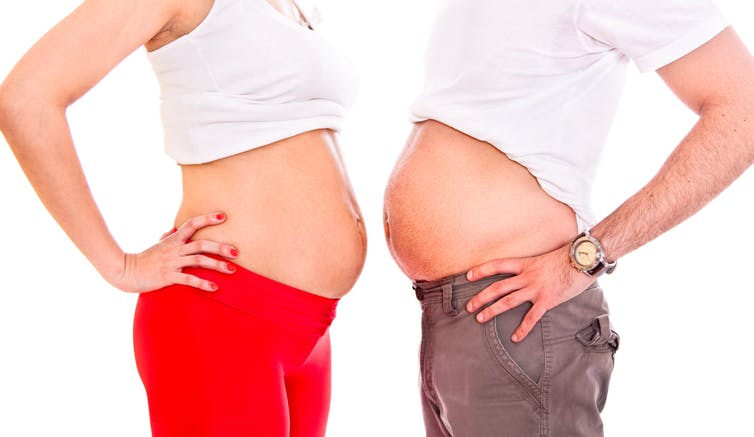
Harry Ashby, the 29-year-old security guard who was signed off work with morning sickness, cravings, a growing stomach and breasts during his girlfriend’s pregnancy, was told he had Couvade syndrome.

Couvade is an involuntary manifestation of pregnancy in men with a partner who is expecting a baby – sometimes called “sympathetic pregnancy”. It isn’t a medically recognised physical or mental disorder, and it isn’t explained by injury or illness.

A range of “pregnancy-related” physical and psychological symptoms include abdominal pain and bloating, back pain, pseudocyesis (euphemistically known as “phantom pregnancy”), lethargy, morning sickness, toothache, food cravings and aversions – many of which were confirmed in a study we carried out at St George’s hospital, in London. Prominent psychological symptoms include ante-natal depression and mood swings, early morning waking, anxiety, poor concentration, distraction and memory loss.

Collectively, these symptoms may signify an empathic identification with a pregnant partner and to the man’s unborn child, but the could also be a resolution of unconscious thoughts that might threaten both.

Couvade symptoms follow a chronological pattern, beginning in the first trimester of pregnancy, before temporarily disappearing in the second and then re-appearing in the final trimester. They can even extend into the period after the baby is born.

While the syndrome primarily occurs in developed countries all over the world, the number of new cases in those countries varies. Several studies have found an incidence of between 25-52% of all men with a pregnant partner in the US; 20% in Sweden, and an estimated 61% in Thailand, though this includes mild to extreme symptoms such as the physical ones above. The incidence in the UK is unknown, but estimates in the 1970s put it between 11%-50%.

A range of theories that have been proposed to explain Couvade syndrome. Along with psychoanalytical and psychosocial explanations, they also include emotional attachment to both the unborn child and partner, and hormonal influences.

Psychoanalysis

Oedipus: mixed feelings.
Henri Fuseli via Daderot

Psychoanalytical theory proposes that the syndrome evolves from the man’s envy of the woman’s procreative ability. The theory also proposes that for the male partner, the pregnancy acts as a catalyst for the emergence of ambivalence and the resurgence of oedipal conflicts. The event may cause regression – the man’s retreat to childhood feelings and conflicts triggered by his partner’s pregnancy, such as rejection, exclusion, ambivalence and anxiety – with a sense of passivity and dependency that is intensified by the developing foetus and which conflicts with the man’s need for autonomy.

A second psychoanalytical theory proposes that expectant fathers may sometimes view the unborn child as a rival for maternal attention. Some have explained this as the expectant father’s interpretation of the unborn baby as a rival from whom attention is diverted. But this is expressed through a more socially acceptable outlet such as the syndrome. This interpretation would suggest that the syndrome has a protective function for the man because it enables him to identify with his pregnant partner and strengthens his protective instincts towards her and the baby.

Psychosocial

Psychosocial theory, which takes in social circumstances, instead focuses on a marginalisation of men during the woman’s gestation and childbirth, especially among men who are having their first child. While motherhood is an important defining feature for women, the same may not be true for fatherhood and men; expectant women have their maternity careers endorsed commercially, socially and medically in contrast to the careers of prospective fathers. Since the 1970s men have become familiar figures in the delivery room and their attendance is now almost obligatory.

Left out.
Delivery room by Shutterstock

The fact that men can’t actually give birth or experience delivery directly can relegate men to an ancillary role where they feel marginal and sometimes useless. To resolve this ancillary status during gestation and childbirth the man inadvertently diverts attention from the woman to himself through a display of the Couvade syndrome. However, this implies that the syndrome is a conscious entity, which I and others, such as Arthur Klein reject.

Transition and crisis

Paternal transitional theory proposes that the transition to fatherhood is potentially pathological, involving disruptive interpersonal struggles that are highly stressful.

According to Klein the transition from dyad – two tied entities such as man-wife – to a triad – group of three – constitutes one of the most cataclysmic periods for the expectant man. This may be compounded by the fact that men usually accept pregnancy but without any concomitant physical changes that reinforce its reality. They lack the biological markers of the transition to parenthood and these “disembodied” experiences of pregnancy are very different from the woman’s experiences. This in turn causes multiple conflicts during transition, including jealousy and rivalry with the unborn baby, an intensified ambivalence toward their own parents and sexuality conflicts. With all of this going on, it wouldn’t be surprising to see some psychological fallout.

Attachment

Yet paradoxically, men who have had preparation for their parental role – ante-natal classes, for example – show a higher susceptibility to being afflicted the syndrome. Attachment theory proposes that the man’s closeness to the foetus gives rise to the syndrome. In a seminal study published in 1983, a sample of white middle-class, first-time expectant men found a modest correlation between more paternal-foetal involvement and attachment (feeling and hearing the unborn child kicking, confirmation through the woman’s pregnancy symptoms and the ultrasound scan) with the incidence of six physical symptoms of the syndrome. These included feeling more tired (34%), sleeping difficulties (33%), indigestion (14%), stomach upsets (12%), appetite changes (8%) and constipation (6%). The investigators concluded men’s symptoms were a reflection of their level of attachment to the unborn child and involvement in the pregnancy.

Attack of the hormones

Couvade syndrome also appears to show a relationship with hormones, but there is a dearth of research investigating such an association. To date only two studies have supported a hormonal basis for the syndrome, one published in 2000 and another in 2001. The findings of both indicated a significant increase in men’s levels of the hormones of prolactin and oestrogen in the first and third trimesters of pregnancy, but lower levels of testosterone and the stress hormone cortisol. These hormonal changes were associated with the display of paternal behaviours as well as Couvade symptoms of fatigue, appetite changes and weight gain.

The ConversationSo a plethora of different theories have offered accounts for the origins of the syndrome. However, some of these, such as the hormonal explanation, have not been investigated sufficiently. And those that have, psychosocial reasons for example, clearly show disparate findings, which weakens a definitive conclusion that the syndrome has roots in this. Suggested directions for future research in the area might focus more hormonal associations with the syndrome.



Arthur Brennan, Senior Lecturer in Psychology, Research Methods and Statistics, Kingston University

This article was originally published on The Conversation. Read the original article.

Tokophobia: what it’s like to have a phobia of pregnancy and childbirth

shutterstock

Catriona Jones, University of Hull; Franziska Wadephul, University of Hull, and Julie Jomeen, University of Hull

It’s very common for women to feel anxious about labour and birth. Worries about the pain of contractions, interventions and the uncertainty of the process are not unusual. But for some women, the fear of labour and birth can be so overwhelming that it overshadows their pregnancy and affects daily functioning.

This severe fear of birth is called tokophobia – which literally means a phobia of childbirth. And for some women, this also includes a dislike or disgust with pregnancy.

Tokophobia can be split into two types – primary and secondary. Primary tokophobia occurs in women who have not given birth before. For these women, a fear of birth tends to come from traumatic experiences in their past – including sexual abuse. It can also be linked to witnessing a difficult birth or listening to stories or watching programmes which portray birth as embarrassing or dangerous. Whereas women who suffer from secondary tokophobia, tend to have had a previous traumatic birth experience which has left them with a fear of giving birth again.

It is difficult to say how common tokophobia is. Research suggests that between 2.5% and 14% of women are affected by tokophobia. But some researchers believe this figure could be as high as 22%.

These figures vary so much because women with different levels of tokophobia were included in the research. So while some women may have relatively mild tokophobia, for others, the condition is much more severe. The figures may also include women who have anxiety and depression rather than tokophobia.

Not a happy occasion

Women with tokophobia come from a wide variety of backgrounds. It is difficult to predict who might be affected, although it is clear that women with tokophobia are also more likely to experience difficulties with anxiety and depression and other mental health problems.

Research suggests some women with the condition choose to avoid pregnancy altogether – or may consider a termination if they find themselves in that position. When pregnant, women with tokophobia may request a caesarean section to avoid the process of actually having to give birth.

Some women find pregnancy itself very difficult, particularly dealing with the growing bump and feeling the baby’s movements. Anxiety, insomnia, sleeplessness, eating disorders and antenatal depression or increased risk of postnatal depression, have all been identified as consequences of tokophobia.

Mothers with tokophobia can struggle to bond with their babies.
Shutterstock

Some of the consequences for women with tokophobia – which emerge during labour – are longer labours. These are usually with an epidural and increased need for forceps or ventouse – this a cup-shaped suction device which is applied to the baby’s head to assist the birth. All of which can have implications for both the woman and her baby.

Afterwards some women with tokophobia may have a less satisfying bond with their babies. And a difficult experience of birth can make women more afraid of birth if they become pregnant again.

Tokophobia treatment

Anecdotal evidence indicates that clinical care for women with tokophobia is patchy. But the good news is that there is help out there for women with this condition. Some women find it helpful to talk through a previous experience of a traumatic birth, others might be reassured by information about labour and birth. Other women, however, may need more targeted treatment – a number of counselling approaches can be helpful.

Giving birth to a child is one of the most intense experiences the body can go through.
Shutterstock

Many women also find it helpful to visit the maternity ward and talk to midwives and obstetricians during pregnancy. Some women find the condition can be very isolating, feeling that nobody else shares this intense fear. For these women, simply knowing that they are not alone, can be very comforting and helpful.

Overcoming a phobia

In Hull and East Riding of Yorkshire, where there is an established perinatal mental health service for women and their families, there has been a recognised need for a consistent approach to caring for and supporting women with tokophobia.

This has led to a group of practitioners, academics and patients to work together to explore the care and support available to these women – and to help address the gaps in service provision.

This pioneering work, which is at the forefront of tokophobia service provision and research in the UK, aims to ensure that women get the right support, and that their psychological and pregnancy needs are met.

The ConversationTokophobia can have debilitating effects on women and their families. Some women will avoid pregnancy, even though they might want to have children. For those who do become pregnant, the condition can overshadow pregnancy and affect the choices they make for labour and birth. This is why we need to work towards preventing tokophobia if possible – as well as providing effective treatment for women who suffer from this difficult condition.

Catriona Jones, Senior Research Fellow in Maternal and Reproductive Health, University of Hull; Franziska Wadephul, Research assistant, University of Hull, and Julie Jomeen, Professor of Midwifery and Dean in the Faculty of Health Sciences, University of Hull

This article was originally published on The Conversation. Read the original article.

Mariah Carey says she has bipolar disorder; a psychiatrist explains what that is

Mariah Carey in Inglewood, Calif. on March 24, 2018.
AP Photo/Jordan Strauss

Arash Javanbakht, Wayne State University

Mariah Carey recently opened up about her struggle with bipolar disorder.

As an assistant professor of psychiatry, I see her courage as an opportunity to explain bipolar disorder, a mood disorder that includes episodes of elevated mood, as well as episodes of depression.

There are two common types: Bipolar I disorder includes manic episodes in which a person experiences heightened or, at times, an irritable mood, for at least a week. This includes high energy, inflated self-esteem, reduced need for sleep, talkativeness or pressured speech, overspending, reckless risky behavior, racing thoughts, increased goal-directed behavior and a substantially increased sex drive. Symptoms are a clear departure from person’s baseline behavior. A patient in a manic episode may have all or some of these symptoms, none of which are induced by drug use.

Bipolar II disorder includes hypomanic episodes, a mood episode that includes the same symptoms at lower severity for a shorter time (four days at least) and without significant impairment of person’s functioning.

It is important to note the required duration of days to avoid a common mistake: Too often people are labeled with this diagnosis because of emotional instability or changes in mood over the course of hours, as a result of stressful events or other psychiatric conditions. I always make sure patients who believe they have this condition know the definition and substantial sustained nature of the episodes.

Diagnosis is mostly based upon psychiatric interviews and a review of the history of previous episodes or current symptoms, if the patient is experiencing a manic/hypomanic episode at the time of psychiatric examination. Historical data could be based on patient’s report, collateral information from family members, or psychiatric records. A history of a manic or hypomanic episode, not justified by medical conditions or drug use, is enough to make the diagnosis.

It is also important to know that the majority of the episodes of mood change in a person with bipolar disorder are of the depressed nature and not manic/hypomanic. That is, a person with bipolar disorder usually experiences more depressive episodes than manic ones.

Treatment is vital to prevent future manic or depressive episodes and to reduce the severity of those that emerge. A manic episode can ruin a marriage, a bank account, or a job, or it can even lead to legal consequences.

The ConversationTreatment usually involves mood stabilizer medications that reduce the chance and severity of future episodes. Mood stabilizers often are the same medications that are used for treatment of epilepsy, and some belong to other categories of psychiatric medications. Reduction of stress and close monitoring of mood by the patient, their family and physician can prevent the emergence of a new episode or its exacerbation.

Arash Javanbakht, Assistant Professor of Psychiatry, Wayne State University

This article was originally published on The Conversation. Read the original article.

Barbara Bush may have suffered from a chronic lung disease called COPD – a doctor explains

Barbara Bush and her husband, George H.W. Bush, at his Houston campaign headquarters June 4, 1964.
AP Photo/Ed Kolenovsky/file

Frank Sciurba, University of Pittsburgh

Former First Lady Barbara Bush died on April 17, 2018, two days after spokespeople said that she had decided not to seek additional medical treatment. CNN had reported that Barbara Bush had COPD.

I am a respiratory disease physician and professor at the University of Pittsburgh School of Medicine, and I direct the COPD clinical and research programs. My research has been inspired by real clinical problems when facing my lung disease patients whom I have worked with over the past 30 years.

COPD is a chronic respiratory condition that results in cough and shortness of breath. It often gets worse. It affects up to 16 million people and is the third-leading cause of death in the United States behind heart disease and stroke. It further results in 6 percent of all deaths worldwide.

The disease is most commonly caused by tobacco smoking and is thus often preventable. Mrs. Bush smoked cigarettes for decades, she wrote in her biography, but quit in 1968. One-fourth of cases occur in nonsmokers, in part due to other environmental exposures. COPD is often undiagnosed because of its slow onset. Also, people often assume that their coughing is “smokers’ cough,” or old age. Women are more likely than men to be diagnosed with COPD.

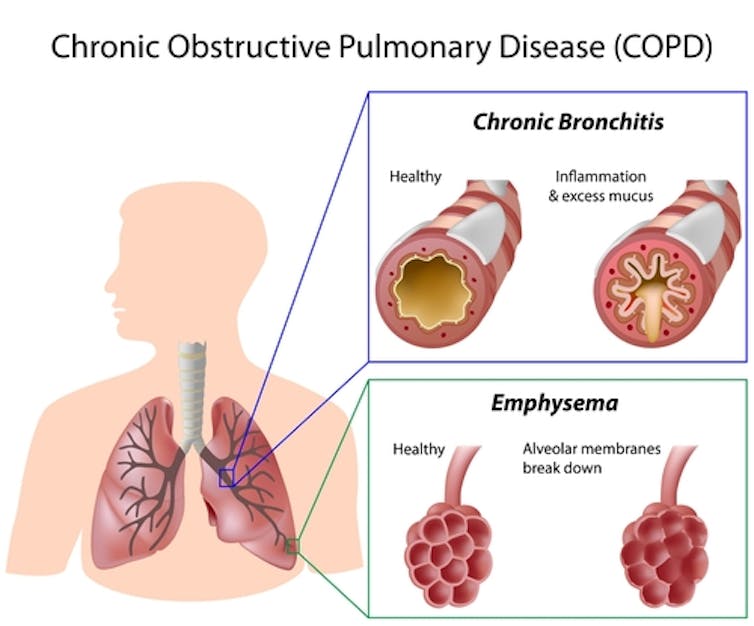
COPD includes several different conditions, including emphysema and chronic bronchitis. They can occur separately or together.

Normal lungs have bronchial tubes that branch like a tree into smaller and smaller tubes, which end in tiny elastic air sacs called alveoli. These fill up as we breathe in and snap back empty when we exhale.

In COPD, the airway tubes narrow due to inflammation, increased mucous production and, eventually, scarring, which is known as chronic bronchitis. Further, the walls of the alveoli can break down, as do small bubbles coalesce to form larger bubbles. This is known as emphysema. As a result, they do not snap back as easily when a person exhales. They have less ability to transfer oxygen into, and remove carbon dioxide from, the blood.

Chronic bronchitis and emphysema are forms of COPD.
Ailia Medical Media/Shutterstock.com

These different processes result in a prolonged and incomplete exhalation, and air remains trapped in the lungs when the next breath begins. As the condition progresses, it becomes increasingly hard to breathe. This results in more fatigue, a decreasing ability to exercise, declining activity and a lower quality of life.

Many COPD patients develop recurrent chest colds, often requiring hospitalization and rising medical bills. Patients susceptible with COPD are also at greater risk of other chronic conditions such as heart disease, which can complicate the diagnosis and management. For example, Mrs. Bush was reported to have had congestive heart failure.

Due to differences in genetics, not all people who smoke get COPD, and not all patients have the same symptoms or progress at the same rate. It is thus critical that people who have a prolonged cough or shortness of breath undergo lung function testing, particularly if they are smokers or former smokers.

The ConversationThe most important treatment for COPD is to stop smoking, but vaccinations, pulmonary rehabilitation, use of long-acting inhalers and other surgical advances have led to improved quality of life, decreased hospitalizations and better survival for many patients with COPD.
Frank Sciurba, Professor of Medicine and Education, University of Pittsburgh

This article was originally published on The Conversation. Read the original article.

Common skin rashes and what to do about them

What’s that rash? Here’s what to look for to diagnose a common skin complaint.
from www.shutterstock.com

H. Peter Soyer, The University of Queensland and Katie Lee, The University of Queensland

This article is part of our series about skin: why we have it, what it does, and what can go wrong. Read other articles in the series here.


Everyone has had the unpleasant experience of a rash on the skin – pink, red or purple, flat or bumpy, itchy, scaly, pus-filled, or just plain unsightly. This variety isn’t surprising, because the skin is a complicated organ.

Infections, allergic reactions, immune system problems and even bad reactions to medication can all manifest as a rash.

Here are a few of the most common types.

Drug allergy

Almost every prescription medication available can cause a rash as a side effect, and more than 80% of those are “exanthematous drug eruptions”, meaning a widespread rash accompanied by other symptoms such as headache, fever and feeling generally unwell.

This rash usually appears within two weeks of starting a new medication, as a widespread, symmetrical rash with pink-to-red spots that are flat or elevated and firm, and that might join together in patches.


Read more:
Common lumps and bumps on and under the skin: what are they?


This type of rash is a hypersensitivity reaction, in which the attacking soldiers of the immune system (called “T-cells”) detect the drug and try to clear it from the body by releasing inflammatory proteins.

Exanthematous drug eruption.
DermNet New Zealand.

Very rarely, a drug can cause a severe and life-threatening rash called “toxic epidermal necrolysis” where the skin begins to peel off in sheets. It’s more common in Han Chinese people with a specific genetic variant, and requires intensive care or burn unit treatment.

Most drug eruptions go away within a week once the patient stops taking the problem medication, or within several weeks in protracted cases. In the meantime, or if the drug is essential, steroid creams (which reduce inflammation) and emollient (softening) moisturisers can bring some relief.

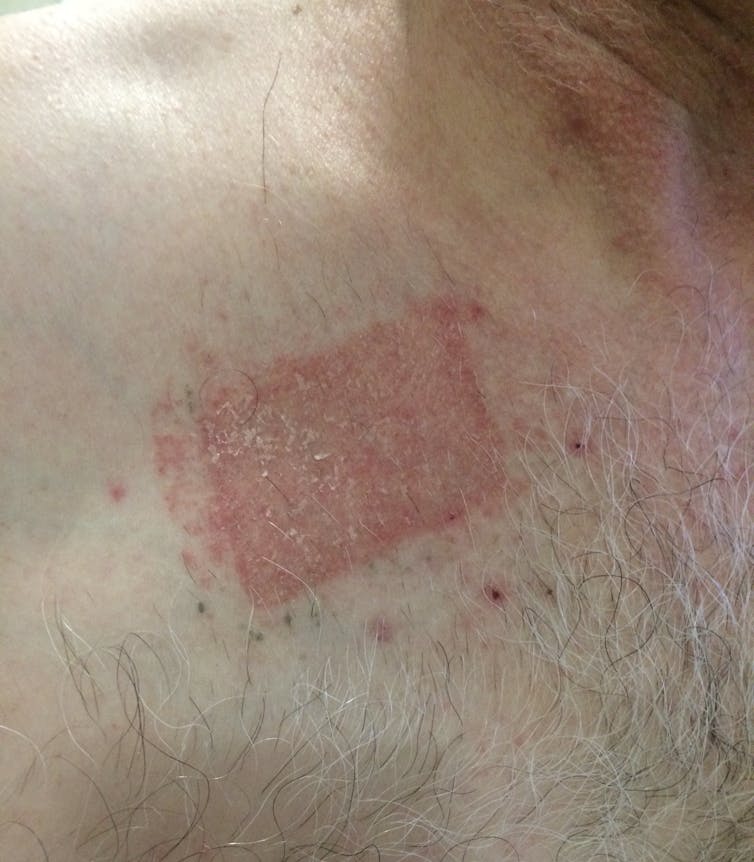
Allergic contact dermatitis

Allergic contact dermatitis is caused by direct skin contact with a substance to which the person is allergic. The immune system’s T-cells overreact to the allergen and release proteins that call more immune cells to the area, making it red and swollen.


Read more:
Why does Australia have so much skin cancer? (Hint: it’s not because of an ozone hole)


It’s often itchy and can be blistered or dry but bumpy. The reaction is often delayed by 48-72 hours, so it can be difficult to determine exactly what caused the reaction. It should also die down by itself over a few days, as long as the allergen is no longer on the skin.

Contact allergies can develop suddenly after years of exposure to an allergen. Jewellery containing nickel, fragrances in lotions, household cleaners, preservatives in hair products, and latex in gloves or condoms are common sources. A dermatologist can carry out a patch test to determine whether a substance is the allergen, by applying it to a small patch of skin.

Severe contact dermatitis from a drug patch.
Dr. Khatmando

Active dermatitis is treated with emollient moisturisers and steroid creams, or with oral steroids or drugs to suppress the immune system if very severe. Further episodes can be prevented by becoming aware of the sources of the allergen, reading labels carefully, and using gloves to handle allergen-containing products.

Eczema

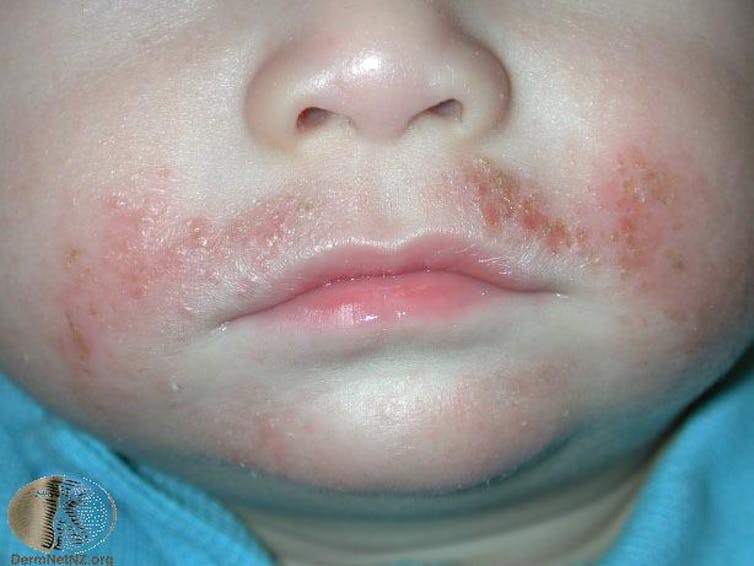
Atopic dermatitis or atopic eczema (often just called eczema) is very common in children from three months old onwards, but appears in adults too, often with hay fever and asthma.

Atopic dermatitis features patches of intensely itchy red skin, sometimes with blisters and weeping patches. Children often have open sores and scabs, because it’s so itchy that it’s hard to refrain from scratching.

Over time the skin becomes thickened and rough from frequent scratching and rubbing. Childhood atopic dermatitis tends to improve as the child grows up, but may continue. Far less commonly, atopic dermatitis can also appear first in adulthood.

Atopic dermatitis is very common in children, but often improves as they get older.
DermNet New Zealand

Atopic dermatitis is a disease of the immune system, in which
structural defects in the skin barrier make it easier for irritants to penetrate into the skin. This throws the delicate balance of the microbial community on our skin out of whack, causing the immune system to go into overdrive. Triggers include stress, sweating, coarse fibres in clothing, inhalation of allergens such as pollen, irritants such as soap or perfumes, and eating food we’re allergic to.

Steroid creams can help treat a bad flare of atopic dermatitis, but shouldn’t be used constantly. In very severe cases, immunosuppressant drugs are prescribed. Ongoing control of atopic dermatitis often includes using emollient moisturisers to combat dry skin, keeping cool, avoiding hot water or irritants, and reducing allergens such as dust mites in the home.

For severe cases that don’t respond to these methods, the drug dupilumab has just been approved for use in Australia. This drug blocks a specific cell receptor to prevent immune cells from detecting two overactive inflammatory proteins.

Atopic dermatitis can have a big impact on quality of life, due to insomnia from the constant itchiness, and restrictions on clothing, body products, pets or activities. Its presence on prominent parts of the body like the face and hands can also reduce self-esteem. Evening sedatives to improve sleep and psychotherapy can help reduce the impact on everyday life.

Psoriasis

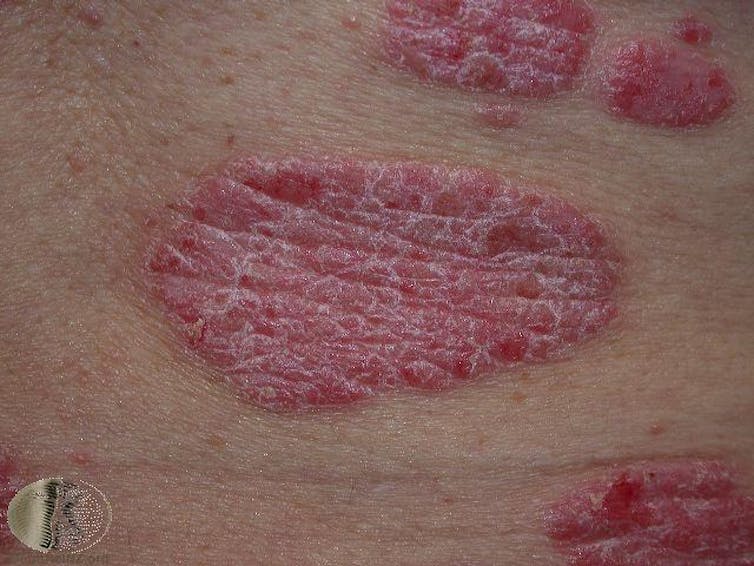
Psoriasis is another chronic immune disorder. It can start at any age and can be lifelong, and is usually present as red plaques (raised or thickened skin) with well-defined edges and silvery-white scales, ranging from a few millimetres to several centimetres across. The overactive inflammation can also damage the joints and lead to psoriatic arthritis.


Read more:
The skin is a very important (and our largest) organ: what does it do?


Often the plaques feel itchy or sore, and because psoriasis is long-lasting and can appear prominently on highly visible parts of the body, it often comes with severe psychological effects.

Psoriasis lesions are raised, red and often have white scales.
DermNet New Zealand

Psoriasis is caused by too many new skin cells being produced and moving up to the surface of the skin too quickly. It’s not known exactly why, but there’s usually an overabundance of inflammatory messenger proteins in the skin.

It can be triggered or aggravated by a streptococcal infection such as tonsillitis, smoking, hormonal changes such as menopause, and some medications. Genetics play an important role in susceptibility to psoriasis and also in what treatments are effective.

Chronic plaque psoriasis, the most common form, can be very resistant to treatment. Small areas can be treated with creams containing steroids, coal tar, or vitamin D. If a lot of the body is covered by plaques, oral immunosuppressant drugs are used, or phototherapy, which uses targeted UV light to destroy over-active immune cells. Moderate sun exposure sometimes improves psoriasis, but sunburn can worsen it – a tricky balance in Australia’s high-UV environment.

These treatments can usually improve the plaques, but it can be very difficult to clear it completely. There are several new drugs coming onto the market for severe psoriasis that hasn’t responded to other treatment.

Tinea

Tinea, or ringworm, is not caused by worms at all but a fungal infection. Tinea is usually named according to the body site it’s on, but the same few kinds of fungus can cause tinea in many parts of the body and it can be spread from one part of the body to another, such as by scratching or using a contaminated towel.

Tinea pedis, on the foot, is an important type because spores can live for weeks in communal showers and changing rooms, making it a common source of infection that can then spread to the trunk, arms and legs (tinea corporis) or groin (tinea cruris, or jock itch). Cats, dogs and other animals are a common source of ringworm fungus, but many types can be spread between people too.

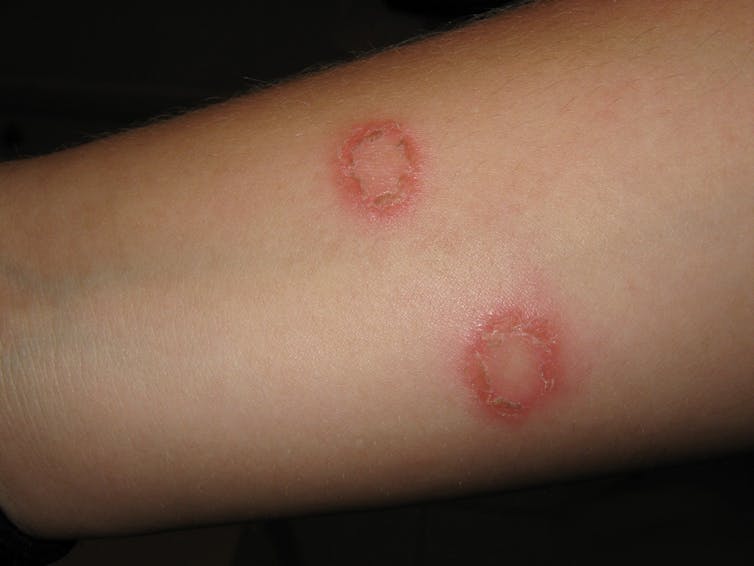
The fungus continues to spread further out while the inner area heals, forming a distinctive ring shape.
Grook Da Oger

Typically, tinea spreads in a circular or oval patch, often healing in the middle so that it appears to be a red scaly ring of infection. Sometimes it can also become a fungal abscess that looks like a boil, feels boggy, and has pustules.

On the feet it can look like ringworm circles, patchy fine dry scales on the sole, blisters on the instep or a moist, red peeling area between the toes (athlete’s foot).

In the groin, it can have a scaly, red raised border and be extremely itchy.

Tinea is diagnosed by microscopic examination and laboratory culture of skin scrapings. It’s usually treated with antifungal creams, or oral antifungal drugs if it persists. It can become chronic in the warm, moist folds of the body.

Shingles

Shingles is a famously painful, blistering rash caused by the reactivation of chicken pox virus, varicella-zoster virus, usually years or decades after the original infection.

The virus lies dormant in nerves near the spine and migrates down the sensory nerve to the skin when it is reactivated, but it’s not known why the virus is reactivated. Some possible triggers are radiotherapy, spinal surgery, other infections, or cancers.

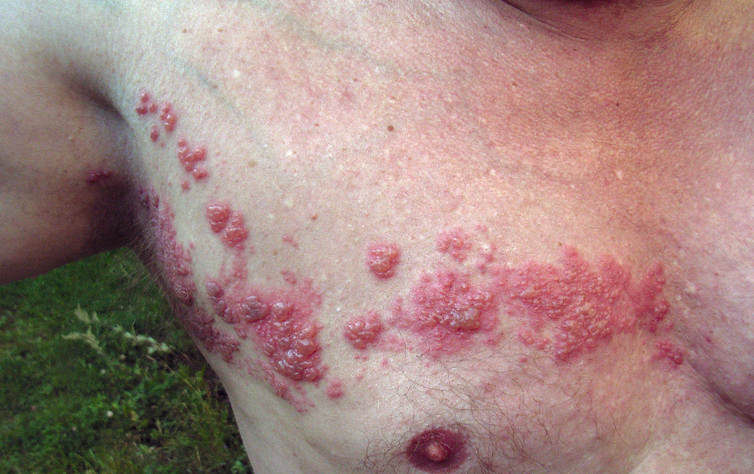
Shingles forms a painful, blistered red rash along the line of a sensory nerve.
Fisle

Shingles starts with pain in the skin that is often described as burning or stabbing, followed in one to three days by a rash of raised red bumps that become blisters and then crust over. The rash is usually confined to a narrow arc of skin, along the sensory nerve that was harbouring the virus.

Patients often have a fever, headache and swollen lymph nodes. Recovery takes two to four weeks but the pain can persist after the rash has healed, called post-herpetic neuralgia.

If it’s caught within three days of onset, antiviral medication can reduce the severity of symptoms and length of the infection. Otherwise, treatment consists of powders or solutions to dry out the rash, as well as pain relief and rest.

The ConversationAustralians aged over 70 are eligible for a free zoster vaccine, which reduces the risk of shingles by half.

H. Peter Soyer, Professor of Dermatology, The University of Queensland and Katie Lee, Research assistant, The University of Queensland

This article was originally published on The Conversation. Read the original article.